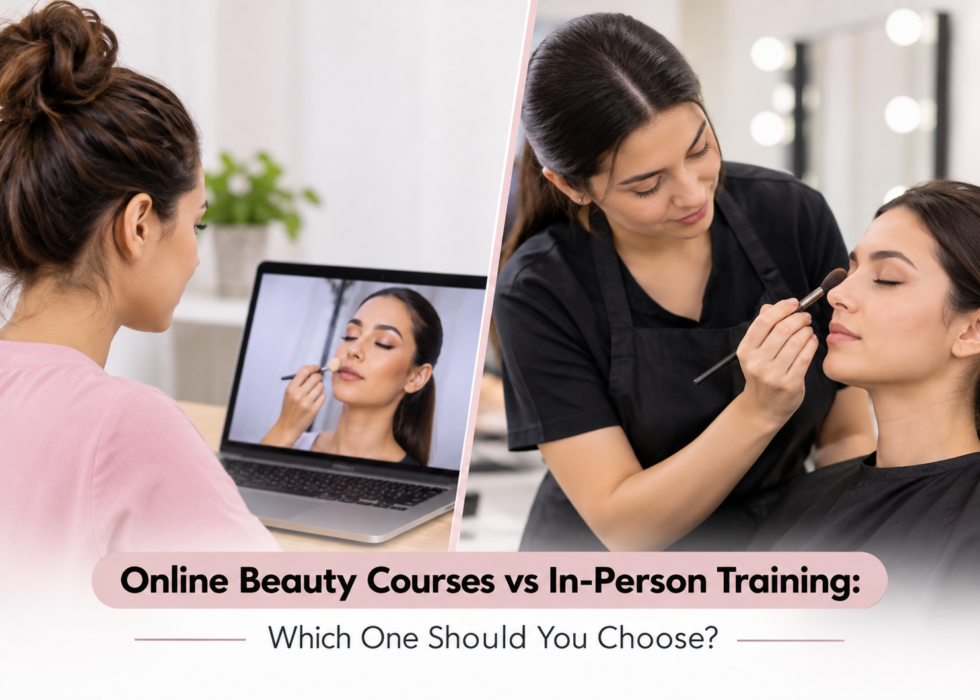

Online Beauty Courses vs In-Person Training: Which One Should You Choose?
A video can show you exactly how a lash fan is picked up, how a brow is mapped or how a cosmetic tattoo machine is held. You can pause it, replay it and watch the demonstration as many times as you need.
But there’s one thing a video cannot do: notice that your hand is slightly tilted, that you’re applying too much pressure or that your technique needs correcting.
That’s where the difference between online and in-person beauty training becomes more apparent.
Online Beauty Training Courses have made it easier to explore new skills without travelling to an academy or working around a fixed classroom schedule. For someone considering a career in the beauty industry, that flexibility can be appealing. The real question, though, is what you expect to learn and whether the format can help you develop the skills needed to perform the treatment.
Watching a technique is only the beginning
A good demonstration can teach you a surprising amount. You can watch how an artist prepares their workstation, studies a client’s features, selects products and approaches a particular treatment. You can also spend time learning the theory behind the work.
For instance, someone interested in cosmetic tattooing can begin by understanding skin anatomy, pigment selection, colour theory and brow design. Similarly, a person exploring lash extensions can learn about different lash styles, eye shapes, mapping and natural lash health.
These subjects give you a foundation. They help you understand why an artist makes certain decisions instead of simply copying their movements.
However, the moment you pick up the tools yourself, things become less predictable.
When practising microblading, the pressure and movement of your hand affect the strokes you create. With lash extensions, even a small mistake in isolation or adhesive placement can change the result. These are not details you can fully understand by watching someone else work.
You have to try, make adjustments and practise until the movements become more controlled.
The part of training that is difficult to replicate on a screen
Consider a beginner learning lash extensions. They may understand the difference between classic and volume lashes, recognise the tools and know how lash mapping works. Yet, during their first attempt, they might struggle to isolate individual natural lashes or maintain consistent placement.
An experienced trainer can spot these problems while the student is working. A small correction at the right moment can make a noticeable difference to how the technique develops.
Cosmetic tattooing presents a similar learning curve. Brow mapping might look straightforward in a demonstration, but creating a shape that suits an individual face takes observation and judgement. Pigment selection, skin response and hand control also need more than theoretical understanding.
This is why practical sessions matter. They give students the opportunity to work with the tools, develop control and receive feedback while learning.
At an academy, you also get to observe how an experienced artist approaches situations that don’t always appear in a perfectly edited tutorial. Real clients have different features, preferences and skin conditions. Learning to account for those differences is part of becoming a capable beauty professional.
Does that mean online learning isn’t worth it?
Not at all. It simply has a different role.
Online learning can be particularly useful when you want to explore a subject before investing in professional training. It can also help existing beauty professionals refresh their knowledge, study new concepts or revisit areas they find challenging.
The important thing is to look beyond the course title.
An online programme might teach the theory of a treatment, demonstrate its application or help you understand the products and equipment involved. That does not necessarily mean it offers supervised practical experience or prepares you to work independently with clients.
Before enrolling, find out exactly what the course covers. Ask whether you will be expected to practise on your own, whether practical assessment is included and how you can get feedback on your work.
A certificate is worth understanding too. Check what it represents, what skills have been assessed and whether additional training or local licensing requirements apply before you offer the treatment professionally.
Choosing a course should start with the skill you want to develop
Someone learning general beauty theory may be perfectly comfortable studying online. Someone preparing to work with a client’s skin or eyes needs to think more carefully about practical instruction.
For technical treatments such as microblading, nano brows and lash extensions, look for training that gives you time to practise rather than relying entirely on demonstrations. Ask about the trainer’s industry experience, the practical component, the class size and the kind of feedback students receive.
At O’some Brows Academy, in-person training is available for people interested in cosmetic tattooing and lash techniques. The academy’s courses cover areas such as microblading, cosmetic tattooing and lash extensions, with practical learning as part of the training experience.
You can explore the available cosmetic tattooing training courses and lash training courses to understand which programme aligns with your interests.
There is nothing wrong with choosing the most convenient way to learn. Just make sure convenience isn’t the only thing influencing your decision. The training format should match the kind of professional skill you want to develop.
Frequently Asked Questions
- Are online beauty training courses suitable for complete beginners?
They can be a useful starting point. Beginners can use online lessons to understand beauty concepts, tools, techniques and hygiene practices. However, practical treatments require hands-on experience before a student can confidently work with clients.
- Can I learn lash extensions through an online course?
You can learn the theory behind lash extensions, including lash types, mapping, eye anatomy and application methods. Developing isolation, placement and adhesive control requires regular practice and, ideally, guidance from an experienced trainer.
- Is in-person training necessary for cosmetic tattooing?
Practical training is particularly important in cosmetic tattooing because the work involves applying pigment to the skin. Students need to develop hand control, understand skin response and learn safe working practices through supervised practice.
- What should I check before paying for an online beauty course?
Read the syllabus carefully. Check whether it covers theory only or includes practical assignments, assessments and instructor feedback. Also clarify what the certificate means and whether the training meets the requirements relevant to the treatments you intend to offer.
- Can I take online lessons before joining an in-person beauty course?
Yes. Studying the fundamentals beforehand can help you become familiar with the terminology, tools and techniques. It can also make practical sessions easier to follow, as you’ll already have some understanding of the subject.
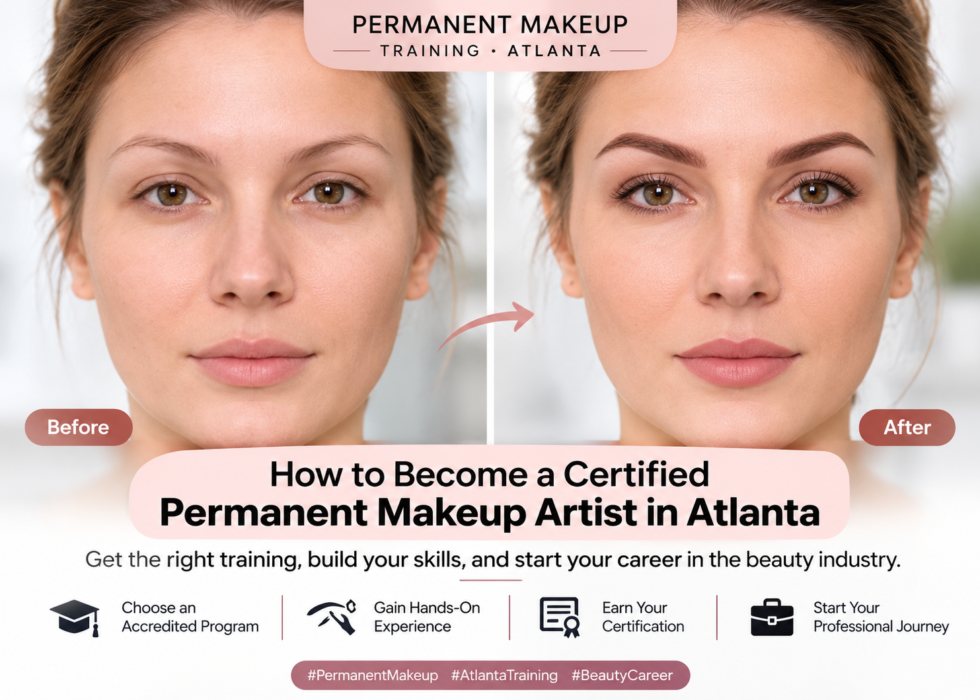
How to Become a Certified Permanent Makeup Artist in Atlanta
Completing a permanent makeup course is an exciting milestone. You’ve learnt how to map brows, work with pigments and understand different cosmetic tattooing techniques. You’re probably already imagining your first few clients.
But before you start taking appointments, there’s another part of the process to understand: getting the right certification to practise.
In Atlanta, this isn’t simply a matter of completing a beauty course and putting its certificate on your wall. Georgia has specific requirements for people performing body art, including cosmetic tattooing and microblading. So, if you’re considering a career in permanent makeup, it’s worth understanding the training and certification process from the beginning.
First, understand what being ‘certified’ actually means
The word certification can be a little confusing in the beauty industry. An academy may award you a certificate after completing its permanent makeup training. Georgia’s Department of Public Health (DPH), however, issues a separate Body Artist Certification.
These documents serve different purposes.
An academy certificate demonstrates that you’ve completed a particular training programme. The DPH certification is the state requirement for practising regulated body art procedures in Georgia.
Under Georgia’s Body Art Rules, the certification categories include tattooing, piercing and microblading. Permanent makeup treatments such as eyebrow tattooing and microblading fall within this area of regulation. The exact category you need will depend on the procedures you intend to offer, so confirm this with the relevant County Environmental Health Office before applying.
This distinction matters. Completing a PMU course does not automatically mean you have fulfilled the state’s requirements to practise.
Your training should go beyond learning how to use a machine
Permanent makeup involves much more than creating a particular brow shape or depositing pigment into the skin. You’ll need to understand how different skin types respond, how to choose pigments, how to maintain consistent pressure and how to work safely.
A client might come in asking for soft ombré brows, while another may prefer a more defined finish. Both require an understanding of shape, colour, skin and technique. The ability to assess what will work for an individual client develops through proper instruction and practice.
When looking for Permanent Makeup Training in Atlanta, pay attention to what happens during the course, not just the certificate you receive at the end.
A useful programme should cover areas such as:
- Brow design, mapping and symmetry.
- Pigment selection and colour theory.
- Skin anatomy and different skin conditions.
- Machine handling, needles, pressure and depth.
- Client consultation, consent and aftercare.
- Hygiene, sanitation and infection control.
Practical experience matters just as much. Working on practice skin is useful when you’re learning hand movements, but supervised work on live models helps you understand how a real treatment progresses.
At O’some Brows Academy, students can explore different cosmetic tattooing programmes, including microblading, eyebrow tattooing and complete cosmetic tattooing. The published course information includes practical training, with subjects such as machine handling, colour theory, skin assessment, client consultation and aftercare.
The two-week Complete Cosmetic Tattooing Course, for example, covers eyebrow shading and lip blush, combining theoretical instruction with practice on latex skin and live models.
What do you need to do to get certified in Georgia?
Once you’ve built your technical foundation, you’ll need to complete the relevant state certification process.
Georgia’s DPH currently outlines the following requirements for body artist applicants:
- Meet the age requirement. Applicants must be at least 18 years old.
- Complete the required safety training. This includes an OSHA-compliant Bloodborne Pathogen and Universal Precautions training programme, along with approved First Aid and CPR training.
- Prepare your supporting documents. The application requires identification, residency documentation and valid documentation of your Hepatitis B vaccination status. The DPH guidance provides details on acceptable documentation.
- Take the relevant body artist examination. Contact a local County Environmental Health Office to schedule the exam for your intended practice area. According to the state’s certification guidance, applicants must score at least 70 points to pass.
- Submit your application to the DPH. Once you pass the examination, the county office forwards your results and the Department sends the certification application. After your documents are reviewed and approved, the DPH issues your Body Artist Certification.
There is one more requirement worth remembering: the studio where you perform body art must also have the appropriate permit. Artist certification and studio permitting are separate requirements.
Since county procedures can vary, contact the Environmental Health Office responsible for the area where you plan to work before making arrangements.
Before your first client, think about the business behind the skill
Learning the treatment is one part of building a career. Running a permanent makeup practice brings its own responsibilities.
You’ll need a process for consultations, client records, consent forms, photographs and aftercare instructions. You’ll also need to understand pricing, client expectations and how to build a portfolio that represents your actual work.
Don’t rush this stage. A strong portfolio takes time to develop, and healed results are just as important as freshly completed treatments when showing potential clients what your work looks like.
At O’some Brows Academy, training is designed for beginners as well as existing beauty professionals who want to develop their cosmetic tattooing skills. You can explore the available cosmetic tattooing training courses in Atlanta to find a programme that matches the techniques you want to learn.
The aim isn’t simply to finish a course quickly. It’s to build the knowledge, practical ability and understanding of local requirements needed to begin your career responsibly.
Frequently Asked Questions
- Do I need a licence to become a permanent makeup artist in Atlanta?
Georgia requires a Department of Public Health Body Artist Certification for regulated body art procedures, including tattooing and microblading. You must also work in a properly permitted studio. Check the requirements for the specific treatments you plan to offer.
- Is a permanent makeup training certificate enough to start working?
No. An academy’s certificate of course completion and Georgia’s DPH Body Artist Certification are separate. Completing a training course does not replace the state’s certification process.
- Can beginners enrol in permanent makeup training in Atlanta?
Yes. O’some Brows Academy lists courses designed for beginners as well as experienced beauty professionals. You should still check the entry requirements and practical expectations of the specific programme you’re considering.
- How long does permanent makeup training take?
It depends on the techniques being taught. O’some Brows Academy lists a three-day intensive microblading course and two-week programmes for complete eyebrow tattooing and cosmetic tattooing. Different courses cover different techniques and levels of practical work.
- Can I perform permanent makeup treatments from a home studio in Georgia?
A home-based setup is not automatically exempt from body art regulations. Georgia requires body art studios to have the relevant permit, and studio requirements apply to the location where treatments are performed. Contact your local County Environmental Health Office before setting up a practice.

How to Become a Certified Lash Technician in Atlanta
So, you’ve been thinking about becoming a lash artist. Maybe you enjoy the beauty industry, love the detail that goes into a good set of lashes, or simply want to learn a skill that could eventually become your own business.
Whatever brought you here, there’s probably one question on your mind: where do you actually start?
Learning eyelash extensions isn’t particularly difficult to get interested in. There are plenty of videos showing the application process, different lash styles and beautiful before-and-after results. But doing the work yourself is a different experience altogether.
If you’re looking at a Lash Technician Course in Atlanta, here’s what you should know before signing up.
First, Understand What Lash Technicians Actually Do
A lash technician does more than attach extensions. Every appointment involves understanding the client’s natural lashes, choosing a suitable style and making sure the extensions are applied without putting unnecessary stress on the natural lashes.
Some clients want a little extra definition. Others prefer a fuller, more noticeable look. Your job is to understand the difference and know how to create the result they’re asking for.
This is why proper training matters. You need to learn the application technique, but also the reasoning behind it.
What Will You Learn During Lash Training?
Most beginner courses start with the basics of natural lash anatomy, tools and products. From there, the focus moves towards application.
You’ll come across three common extension styles during your training.
Classic lashes involve attaching one extension to one natural lash. They’re a good option for clients who prefer a more defined, everyday look.
Volume lashes use lightweight extensions arranged into fans. They create a fuller appearance and require a different level of control when working with the extensions.
Hybrid lashes bring the two techniques together. Some classic extensions are combined with volume fans to create a textured finish.
Beyond these styles, you’ll need to understand lash mapping, isolation, adhesive application, retention and safe removal. Hygiene and aftercare are equally important, even if they don’t seem as exciting as learning a new lash style.
The Part That Takes Practice: Getting Your Application Right
Here’s something you may not realise before starting your training: isolation takes patience.
Each natural lash needs to be separated before an extension is attached. If neighbouring lashes stick together, it can cause discomfort and potentially damage natural lash growth.
Then there’s adhesive control. Too much can create clumping, while poor placement can affect retention. Getting the right distance and direction takes a fair amount of practice.
Your first few attempts might be slow. That’s perfectly normal.
A good training course should give you time to understand these details rather than rushing through the application just to finish a set. Practising on mannequins and suitable training materials, followed by supervised model practice, helps you become more comfortable with the process.
Choosing a Lash Technician Course in Atlanta
Not every course will teach you in the same way. Some may focus more on demonstrations, while others provide greater opportunities for hands-on work.
Before enrolling, find out how much practical training is included. Ask whether the trainer gives individual feedback, what products and tools you’ll learn to use, and whether topics such as lash retention, removal and aftercare are covered.
It is also worth understanding what happens after the course. Can you reach out if you have questions when you begin practising? Does the academy provide any guidance beyond the classroom?
At O’some Brows Academy, eyelash extension training is available for beginners and beauty professionals who want to expand their services. The academy’s published course information lists an approximately 2.5-day programme covering the fundamentals of lash application and related techniques.
If you’re considering enrolling, speak with the academy about the course structure, practical sessions and what you’ll need to bring along.
Do You Need a Licence to Work as a Lash Technician in Atlanta?
This is something worth checking before you start accepting clients.
Georgia has specific professional licensing requirements for beauty services, and the rules can depend on the treatment being offered and how the business operates. Completing a private lash training course does not automatically replace any state licensing requirement.
Check with the Georgia State Board of Cosmetology and Barbers about the qualifications and permissions applicable to your intended services. It’s better to understand this before investing in equipment or setting up a workspace.
What Happens After You Complete Your Training?
Don’t expect to become an expert the moment you receive your certificate. Lash artistry is a hands-on skill, and you’ll need time to develop your speed, accuracy and confidence.
Start by revisiting what you learnt during training. Work on your isolation, practise different lash maps and pay attention to how your sets look from different angles.
Once your trainer considers you ready and you meet the relevant professional requirements, you can begin building your portfolio through appropriate model work.
Photography will become useful here. Take clear pictures of your work, maintain consistent lighting and document different styles. These images can eventually help potential clients understand your approach and decide whether your services suit them.
You may also find yourself developing an interest in other treatments, such as lash lifts. There’s no need to learn everything at once, though. Get comfortable with one service before adding another.
Is Lash Training Worth It for Beginners?
If you enjoy detailed work and are willing to practise, lash artistry can be a good skill to develop.
It also offers room to grow. You could begin with classic extensions, learn volume techniques later and gradually build a service menu around the kind of clients you want to attract.
The important thing is to choose training that gives you a proper understanding of the work, not just a certificate to put on your wall.
If you’re exploring lash training courses in Atlanta, take a look at O’some Brows Academy and find out whether its eyelash extension programme fits your learning goals.
Frequently Asked Questions
1. Can I become a lash technician without prior beauty experience?
Yes, you can start learning lash extensions as a beginner. Look for a course that introduces the basics, including natural lash anatomy, product knowledge, isolation and application.
2. How long does it take to complete a lash technician course in Atlanta?
It depends on the academy and the techniques covered. O’some Brows Academy lists its eyelash extension training programme as approximately 2.5 days. Check with the academy for the latest course schedule.
3. Will I receive a certificate after completing lash training?
Certificate policies vary between academies. Before enrolling, ask what type of certificate is provided and what it represents. Also remember that a course certificate may not replace any professional licence required by Georgia.
4. Is lash extension training suitable for complete beginners?
Yes. Beginner programmes introduce the tools, products and application methods needed to get started. You will still need regular practice to develop consistent results.
5. Can I start my own lash business after completing a course?
You can work towards starting a lash business after training, provided you meet the applicable licensing and business requirements. You’ll also need to consider your workspace, equipment, hygiene practices and client management.
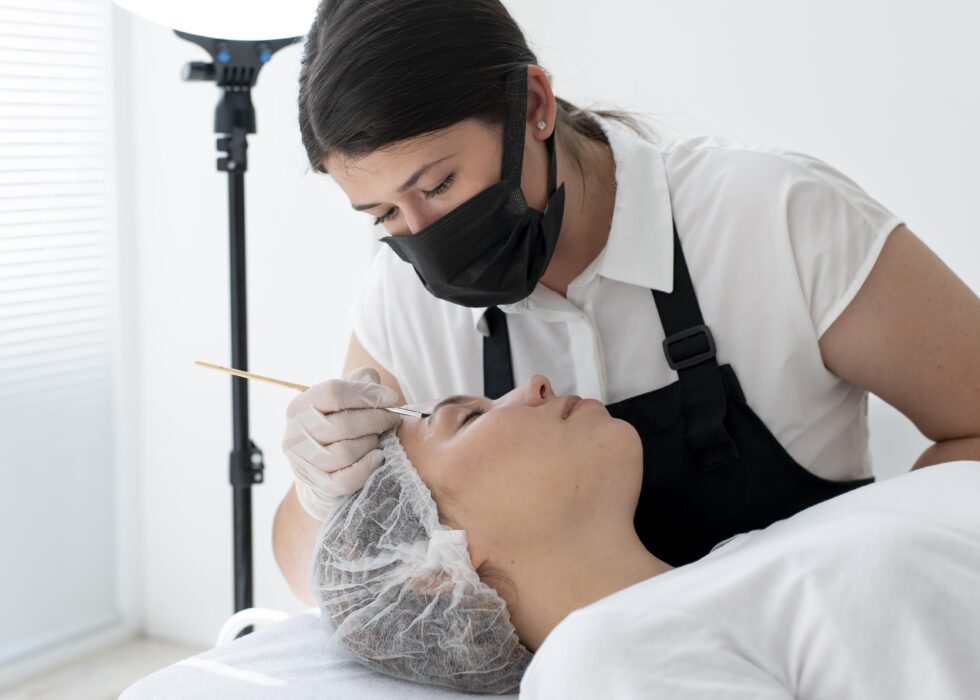
What Should You Practice After Completing a Microblading Training Course?
Completing a microblading training course feels like a big milestone. You’ve learnt brow mapping, pigment selection, stroke techniques and the basics of working with clients. You may even have completed your first practical session.
But here’s something every new artist should understand: finishing your training doesn’t mean you’ve finished learning.
Microblading is a skill that develops through repetition. The difference between knowing how a technique works and performing it consistently comes down to practice, observation and patience.
If you’ve recently completed a microblading training course, here are the skills worth focusing on before taking the next step in your career.
1. Practise Brow Mapping Until It Feels Natural
Brow mapping is one of the first skills to revisit after training.
It involves designing a brow shape that works with the client’s facial structure, natural brow growth and desired appearance. Even a technically good microblading treatment can look unbalanced if the initial mapping isn’t right.
Start by practising:
- Identifying the brow’s starting point, arch and tail
- Creating symmetrical outlines
- Measuring brow proportions
- Working with different face shapes
- Drawing both brows with consistent proportions
Use mapping tools, pencils and practice sheets to repeat the process.
Don’t rush to make the brows look identical. Natural faces aren’t perfectly symmetrical, and your goal should be to create a balanced design that suits the individual.
The more mapping you practise, the less you’ll have to rely on guesswork during consultations.
2. Work on Hair Stroke Patterns
Microblading is known for its fine, hair-like strokes. Creating them consistently takes time.
On practice skin, focus on developing different stroke patterns rather than repeating the same few lines.
Practise:
- Straight strokes
- Curved strokes
- Short and long strokes
- Front brow patterns
- Arch and tail patterns
- Natural transitions between strokes
Pay attention to how the strokes flow together.
A brow shouldn’t look like a collection of lines drawn in the same direction. The pattern needs to follow the natural growth of brow hair.
O’Some Brows training curriculum includes understanding hair stroke placement, brow design and practical work on practice skin. These are skills worth continuing to refine after the course.
3. Improve Your Hand Control
A steady hand is essential for microblading.
Your strokes should look deliberate rather than shaky, uneven or overly repetitive. This is something you build gradually, not something that automatically happens after receiving a certificate.
Practice skin gives you a space to work on hand movement and tool handling without working on a live client.
Focus on controlled movements and consistency. Avoid trying to increase your speed too early.
The goal at this stage isn’t to finish a brow in record time. It’s to develop the control needed to produce clean, consistent work.
Remember that practice skin doesn’t perfectly replicate human skin. Technique, pressure and depth must be developed through appropriate supervised training before performing treatments on clients.
4. Understand Pigment Selection and Colour Theory
Choosing a pigment isn’t simply about matching the client’s hair colour.
Skin undertones, natural brow colour, the desired result and how pigment may heal all influence the selection.
After completing your microblading training course, spend time revisiting colour theory.
Learn to identify warm, cool and neutral undertones. Practise understanding how different pigment shades interact and why a colour that looks suitable in the bottle may not produce the same appearance after healing.
You should also become familiar with your training materials and the manufacturer’s pigment guidance.
Colour selection becomes easier when you understand the reasoning behind it instead of relying on memorised combinations.
5. Study Different Brow Shapes
Not every client wants the same eyebrow.
Some prefer a soft, natural brow. Others want a more defined arch or a straighter shape.
Practise designing brows for different preferences and facial structures. Use photographs, drawing exercises and mapping sheets to explore different designs.
This will help you become more adaptable.
A good artist doesn’t simply recreate one signature brow on every client. They understand how to adjust the design according to the person sitting in front of them.
6. Revisit Skin Anatomy and Contraindications
Technical practice is important, but so is understanding the skin you’re working with.
Microblading is a cosmetic tattooing procedure that involves the skin. Artists need to understand skin anatomy, healing, hygiene and the factors that may affect treatment suitability.
Review your training notes on:
- Skin structure and healing
- Identifying potential contraindications
- Infection prevention
- Hygiene and sanitation
- Pigment handling
- Client consultation and consent
- Aftercare instructions
If a client presents with a condition that may affect their suitability for treatment, don’t make assumptions. Follow your training protocols and seek appropriate professional guidance.
Knowing when not to perform a treatment is part of becoming a responsible artist.
7. Practise Client Consultation Skills
A beautiful brow design begins before the procedure.
During a consultation, you need to understand what the client wants, explain what the treatment can realistically achieve and discuss relevant risks and aftercare.
You can practise consultation scenarios with friends or fellow students without performing a treatment.
For example, imagine a client asks for extremely dark, sharply defined brows despite having naturally light and sparse hair.
How would you explain the options?
What questions would you ask?
How would you manage expectations?
These conversations help prepare you for situations that cannot be solved with technical skill alone.
8. Build a Portfolio of Your Practice Work
Documenting your progress can be surprisingly useful.
Take clear photographs of your practice skins and completed brow designs. Keep them organised so you can compare earlier work with newer attempts.
Look for improvements in:
- Stroke consistency
- Brow symmetry
- Design proportions
- Pattern flow
- Overall neatness
You can also ask your trainer for feedback on specific areas rather than simply asking whether your work looks good.
A portfolio should eventually include properly documented client work, with appropriate consent. Practice skin photographs can demonstrate your learning process, but they shouldn’t be presented as actual client results.
9. Don’t Rush Into Working on Clients
It’s natural to want to start earning after completing a course.
However, microblading requires more than a certificate. You need consistent technique, appropriate supervision and compliance with the regulations that apply to your location.
Before offering treatments, make sure you understand the licensing, facility, insurance and health requirements relevant to your area.
Practise on artificial skin first. Any live-model practice should take place only when permitted and under the appropriate supervision and conditions.
O’Some Brows Academy’s training covers practical technique, hygiene, client communication and business considerations. Its approach also emphasises continued learning beyond the initial training experience.
Your Training Is the Starting Point
Completing a microblading training course gives you the foundation. What happens next depends on how you use it.
Spend time improving your mapping. Repeat your stroke patterns. Study colour theory. Learn to recognise when a client may not be suitable for a treatment.
Most importantly, don’t confuse speed with skill.
The artists who develop strong techniques are often the ones willing to go back to the basics, identify what needs improvement and practise with intention.
If you’re looking to build your skills further, O’Some Brows Academy offers cosmetic tattooing training in Atlanta, including microblading and other permanent makeup techniques. Continued education and supervised practical experience can help you build a stronger foundation as you progress.
Frequently Asked Questions
1. What should I practise first after completing a microblading training course?
Start with brow mapping and hair stroke patterns on artificial practice skin. These foundational skills help you develop design accuracy and hand control before progressing to more advanced practice.
2. How much should I practise after microblading training?
There isn’t a universal number of hours. Consistent, focused practice is more useful than rushing through a large number of repetitions. Your trainer can help assess when your technique is ready to progress.
3. Can I practise microblading on real clients immediately after training?
Only when you meet the applicable legal, licensing, safety and supervision requirements. Completing a course does not automatically grant permission to perform treatments in every location.
4. Why is brow mapping important for microblading artists?
Brow mapping helps establish the shape, proportions and symmetry of the brows before pigment application. It provides a design foundation that can be customised to the client’s facial features and preferences.
5. Does a microblading training course provide all the skills needed to become an expert?
A course provides foundational knowledge and practical instruction. Developing expertise takes continued practice, feedback, experience, professional development and a strong understanding of client safety.
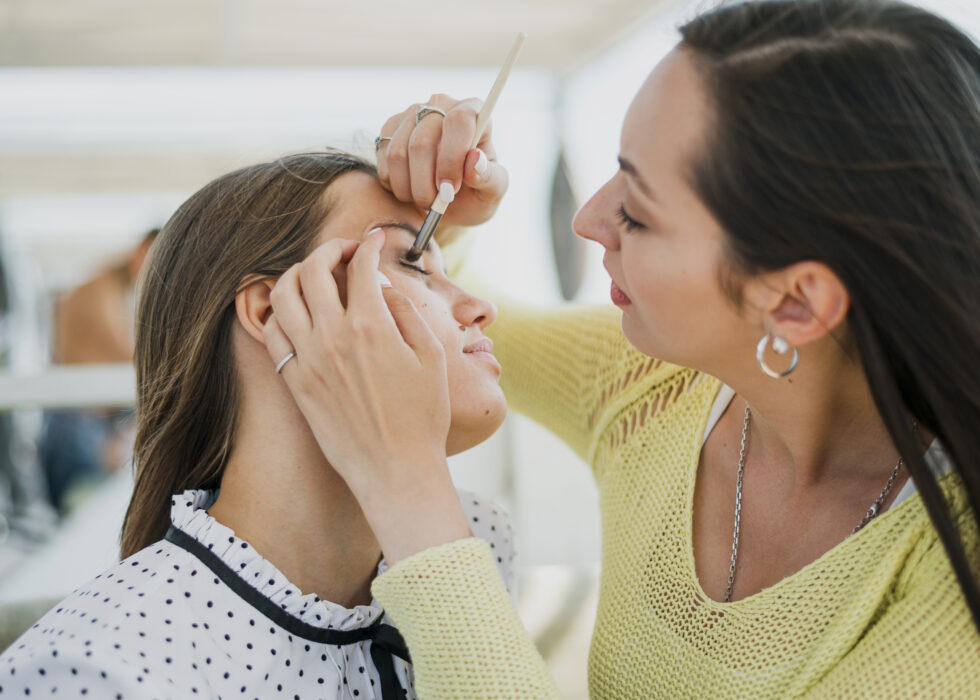
Lash Lift vs. Lash Extensions: Which Training Course Should Beginners Choose in Atlanta?
If you’re thinking about starting a career in lash artistry, one of the first decisions you’ll face is choosing between lash lift training and eyelash extension training. Both treatments are popular, but they involve different techniques, products and levels of precision.
For beginners exploring lash training courses in Atlanta, the right choice depends on the kind of services you want to offer, how you prefer to work and how much time you’re ready to invest in learning.
Let’s break down the differences so you can make a more informed decision.
What Is Lash Lift Training?
A lash lift is a treatment that curls and lifts a client’s natural lashes, creating a more open and defined appearance without adding extensions. The process uses specially formulated lifting solutions and silicone shields to reshape the natural lashes.
Lash lift training focuses on understanding the natural lash structure, selecting the right shield, applying lifting solutions correctly and achieving a consistent curl.
A beginner’s course typically covers:
- Natural lash anatomy and growth cycles
- Shield selection for different lash lengths and eye shapes
- Product knowledge and lifting chemistry
- Step-by-step lash lift application
- Lash tinting and aftercare
- Hygiene, sanitation and client safety
Lash lifts can be a good starting point for someone who wants to learn a focused treatment with a relatively straightforward service process. However, working around the eyes still requires careful product handling and a strong understanding of safety.
What Is Lash Extension Training?
Lash extensions involve attaching individual synthetic lashes or fans to a client’s natural lashes using professional adhesive. The goal is to create a customised look, ranging from subtle enhancement to fuller, more dramatic styles.
Unlike lash lifts, extension application requires you to work with individual natural lashes and maintain precise placement throughout the service.
A comprehensive lash extension course generally covers:
- Classic, hybrid and volume lash techniques
- Lash mapping and styling for different eye shapes
- Isolation and adhesive application
- Fan creation and attachment
- Lash health and retention
- Refills, removal and aftercare
- Client consultation and photography
The learning curve can feel steeper at first. Isolation, adhesive control and consistent placement take plenty of practice. But if you enjoy detailed, hands-on work, lash extensions can open the door to a wider range of customised services.
Lash Lift vs. Lash Extensions: Key Differences
| Factor | Lash Lift Training | Lash Extension Training |
| Treatment | Lifts natural lashes | Adds synthetic lashes or fans |
| Main skill | Shield selection and solution placement | Isolation, attachment and lash mapping |
| Learning curve | Often easier to begin with | Requires more detailed practice |
| Course duration | Usually shorter | Usually longer |
| Maintenance | Clients may return for repeat lifts | Clients often need refills |
| Styling options | Focuses on the natural lash curl | Offers a wider range of lengths and volumes |
| Ideal for | Beginners interested in natural enhancement | Beginners interested in detailed lash artistry |
Which Course Should Beginners Choose?
There isn’t one right answer for everyone. Here’s how to decide.
Choose Lash Lift Training If…
You want to start with a focused treatment and learn how to enhance natural lashes. Lash lift training may suit you if:
- You’re completely new to the beauty industry.
- You prefer working with natural lashes rather than adding extensions.
- You want to learn a treatment that can complement other beauty services.
- You’re interested in offering natural-looking results.
A lash lift course can help you build your foundation in lash anatomy, product handling and client safety before exploring other services.
Choose Lash Extension Training If…
You’re drawn to the artistry involved in creating customised lash looks. Extension training may be the better fit if:
- You enjoy detailed, precision-based work.
- You want to offer classic, hybrid and volume styles.
- You’re interested in building a dedicated lash clientele.
- You’re willing to spend time practising isolation and application techniques.
Lash extensions may take longer to master, but the range of styling possibilities makes them appealing to aspiring lash artists.
Can You Learn Both?
Absolutely. In fact, learning both treatments can help you build a more versatile service menu.
You could begin with lash lift training to understand natural lash anatomy and product handling, then move on to extensions once you’re comfortable. Alternatively, if extensions are your main career goal, you can start with an extension course and add lash lifts later.
The sequence should reflect your career plans rather than a belief that one treatment is a compulsory prerequisite for the other.
What Should You Look for in Lash Training Courses in Atlanta?
Choosing a course based on its duration or certificate alone may not give you the full picture. Pay attention to the training experience.
Look for a programme that includes:
- Hands-on practice: You should have an opportunity to apply what you learn, not just watch demonstrations.
- Eye and lash health: Safety, hygiene and product handling should be central to the curriculum.
- Personalised guidance: Small classes can make it easier to receive feedback on your technique.
- Aftercare education: You should know how to explain maintenance and aftercare to clients.
- Business fundamentals: Client consultations, photography and marketing can help you prepare for working professionally.
At O’some Brows, the lash training programme includes eyelash lifting and extension courses designed for beginners as well as existing beauty professionals. The academy offers practical instruction covering areas such as lash health, application techniques, product knowledge and aftercare.
The eyelash lifting course is listed as a one-day programme, while the eyelash extension course runs for approximately 2.5 days. Course details and availability can be confirmed directly with the academy.
Start Your Lash Artistry Journey With the Right Training
If you’re a beginner, a lash lift course can be a practical introduction to working with natural lashes. If your goal is to create customised lash sets and build a career focused on extensions, extension training may be the more suitable investment.
Whichever route you choose, remember that completing a course is only the beginning. Consistent practice, safe application and continued learning are what help turn your training into a professional skill.
Explore the lash training courses at O’some Brows to find a programme that aligns with your goals.
Frequently Asked Questions
1. Can beginners enrol in lash training courses in Atlanta without prior experience?
Yes. Many lash training courses are designed for beginners with no previous experience. Check the course requirements before enrolling to ensure the programme covers the fundamentals.
2. Is lash lift training easier than lash extension training?
Lash lift training is often easier to begin with because the technique involves lifting natural lashes rather than attaching extensions individually. However, both treatments require precision, product knowledge and strict safety practices.
3. How long does it take to complete lash training?
Course duration varies by treatment and academy. At O’some Brows, the lash lift course is listed as a one-day programme, while eyelash extension training runs for approximately 2.5 days.
4. Can I offer lash lifts and lash extensions after completing both courses?
You can work towards offering both services after completing the relevant training, provided you meet applicable licensing and regulatory requirements. You should also continue practising until you can perform each treatment safely and consistently.
5. Which lash course is better for starting a beauty business?
Both can be useful. Lash lifts may be a good starting service for a beginner, while extensions offer more styling options. Your choice should depend on your interests, target clientele and the services you want your business to provide.
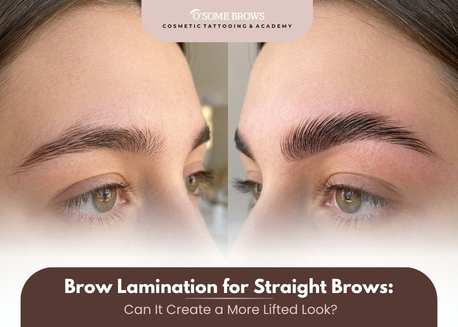
Brow Lamination for Straight Brows: Can It Create a More Lifted Look?
Straight brows have their own appeal. They can look soft, balanced and naturally understated.
But sometimes “straight” isn’t exactly the look you chose. Your brow hairs may simply grow sideways or downward, making the brows appear flatter than you’d like.
That’s where brow lamination can make a difference.
Brow Lamination for Straight Brows doesn’t create a brand-new arch or permanently change your natural brow structure. What it can do is reposition the hairs so they sit in a more lifted direction. For the right brows, that small shift can noticeably change the overall shape.
So, how much lift can you realistically expect?
Why Do Some Brows Naturally Look Straight?
Your brow shape isn’t determined by one thing.
The position of your brow bone matters, but so does the direction in which individual hairs grow. If most hairs naturally point sideways rather than upward, the brow can appear relatively flat.
Downward-growing hairs can make that effect even stronger.
This means two people with similar natural brow shapes can have very different-looking brows simply because their hair growth patterns aren’t the same.
Brow lamination focuses on that second part: the hairs themselves.
What Does Brow Lamination Actually Do?
Brow lamination is a treatment that makes brow hairs more flexible so they can be repositioned into a more uniform direction.
Think of what happens when you brush your eyebrows upward with a spoolie and suddenly see more shape.
The front looks fuller. The arch becomes easier to notice. The tail appears cleaner.
Then you leave the house and, several hours later, the hairs have started heading back to their favorite positions.
Lamination helps the brows maintain that styled effect for longer.
It doesn’t tattoo the skin or add new hairs. Your existing brow hairs are simply being redirected and styled.
Can Straight Brows Really Look More Lifted?
Yes, but there’s an important distinction between lifting the hairs and creating an entirely new brow shape.
If your brows look straight primarily because the hairs grow sideways or downward, repositioning them upward can create a noticeably more lifted appearance.
The upper edge of the brow may become more visible, and an existing subtle arch can sometimes appear stronger.
However, lamination cannot physically move the brow higher on your face.
It also can’t manufacture a dramatic arch if your natural brow structure doesn’t have one.
A realistic goal is a more open, groomed and lifted version of your natural brows—not completely different eyebrows.
Try This Before Booking
There’s a simple test you can do at home.
Take a clean spoolie and brush your brow hairs upward, following their natural shape rather than pushing every hair vertically.
Now look at your brows from a normal distance.
Do they appear fuller?
Does the arch look more noticeable?
Do your eyes seem slightly more open?
If brushing the hairs upward already creates a shape you like, Brow Lamination for Straight Brows may help you maintain a similar effect more easily.
If brushing makes almost no difference, lamination may not create the level of change you’re imagining.
What If Your Brow Hairs Grow Downward?
Downward-growing hairs are one of the reasons a naturally good brow shape can look flatter than it actually is.
They can also make the tail appear lower or less tidy.
Lamination can help redirect those hairs so they follow a more flattering pattern.
The result doesn’t necessarily need to be the extremely vertical “soap brow” style you may have seen online. A brow professional can position the hairs at softer angles for a groomed look that still feels natural.
That’s worth mentioning during your appointment.
“Lifted” doesn’t have to mean “standing straight up.”
Can Lamination Make Straight Brows Look Fuller Too?
Often, yes.
When hairs lie flat or overlap one another, they cover less visible space across the brow.
Brushing and repositioning them can spread those hairs more evenly. Suddenly, a brow that looked narrow may appear wider and fuller.
But there’s a limit.
Brow lamination cannot create hairs in completely bare areas. If you have significant gaps or very sparse sections, rearranging the existing hairs may not provide enough coverage.
In that situation, tinting or a permanent makeup technique may be worth discussing depending on your goals.
Brow Lamination vs. Brow Tinting
These treatments are easy to confuse because both can make eyebrows look more noticeable.
Their jobs are different.
Brow lamination changes direction. It helps reposition the natural hairs.
Brow tinting changes color. It darkens lighter brow hairs so they’re easier to see.
If your straight brows are already dark but lie flat, lamination addresses the more relevant problem.
If the shape is fine but lighter hairs make the brows look thin, tinting may be enough.
And if you have both concerns, ask a professional whether combining services would suit your brows.
What Happens During Brow Lamination?
During the treatment, professional solutions are used to make the brow hairs easier to manipulate and reposition.
The hairs are then brushed into the desired shape before being set.
This is why discussing your preferred finish beforehand matters.
Bring reference photos if you have them, but pay attention to the person’s natural brows in those photos. A dramatic arch created on someone else’s face isn’t necessarily achievable—or even flattering—on yours.
A better reference may simply be a photograph showing the degree of lift and softness you prefer.
What Happens After the Appointment?
Your brows may initially look particularly sleek and structured. The finish becomes more natural as you settle into styling them yourself.
Follow the aftercare provided by your brow professional. Because lamination chemically processes the brow hairs, treating them gently is important.
Avoid experimenting with random products immediately afterward simply because someone online recommended them.
Your technician knows which products were used and can give aftercare instructions accordingly.
Is Brow Lamination Permanent?
No.
Brow lamination is a temporary treatment. As your brow hairs continue through their natural growth cycle, the laminated effect gradually diminishes.
For someone experimenting with a more lifted brow, that can actually be useful.
You get to see how the shape works with your face without committing to a permanent change.
If you love it, you can repeat the treatment when appropriate.
If you don’t, your brows aren’t locked into that style.
Who Is Brow Lamination for Straight Brows Best Suited To?
It may be worth considering if your brows:
- Naturally grow sideways or downward
- Look more lifted when brushed upward
- Have enough hair but lack visible shape
- Frequently fall out of place after styling
- Look flatter than you’d prefer
- Need more structure rather than additional pigment
The condition of your brow hairs and skin also matters, so a professional assessment is useful before treatment.
A Lift Doesn’t Have to Mean a Dramatic Arch
This is probably the most important expectation to set.
Straight brows don’t need to become highly arched to look more lifted.
Sometimes changing the direction of the front hairs and slightly raising the middle and tail is enough to make the entire brow feel different.
That’s what makes Brow Lamination for Straight Brows interesting. You’re not necessarily changing your natural shape. You’re seeing what that shape looks like when the hairs actually work with it.
O’Some Brows offers brow services for clients across the Atlanta area. A consultation can help determine how much lift your natural growth pattern can realistically achieve and whether lamination is the right treatment for the result you want.
Frequently Asked Questions
1. Can brow lamination give straight eyebrows an arch?
Brow lamination can make an existing subtle arch more noticeable by repositioning the hairs, but it cannot completely change your natural brow structure or create a dramatic arch where one doesn’t naturally exist.
2. Does brow lamination work on downward-growing eyebrows?
It can help redirect downward or sideways-growing hairs into a more lifted and controlled position. The amount of change depends on your natural brows and hair pattern.
3. Will laminated brows have to stand straight up?
No. Brow hairs can be styled at different angles. If you prefer a softer result, tell your brow professional that you want a natural-looking lift rather than an extremely brushed-up finish.
4. Can brow lamination make straight brows look thicker?
Repositioning the existing hairs can spread them across more of the brow area, creating a fuller appearance. It cannot, however, create new hairs in bare areas.
5. Is brow lamination permanent?
No. Brow lamination is temporary. The effect gradually wears off as your natural brow hairs grow and return to their usual pattern.
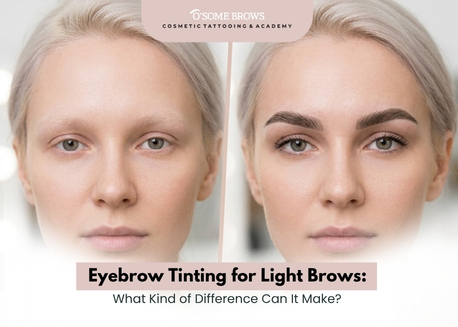
Eyebrow Tinting for Light Brows: What Kind of Difference Can It Make?
Eyebrow Tinting for Light Brows: What Kind of Difference Can It Make?
Your eyebrows can be full and still look sparse.
It sounds contradictory, but light brow hairs have a habit of disappearing against the skin. Stand close to the mirror and the hairs are clearly there. Take a few steps back and suddenly half your brow seems to have vanished.
This is exactly where tinting can be useful.
Eyebrow Tinting for Light Brows doesn’t add hair, tattoo the skin or completely redesign your eyebrows. It simply makes existing hairs easier to see. Yet for naturally blonde, light brown, gray or faded brows, that change in color can make a surprisingly noticeable difference.
Why Can Light Brows Look Thinner Than They Are?
Brow fullness isn’t only about how many hairs you have.
Contrast matters too.
When brow hairs are close in color to your skin, particularly the fine hairs around the edges and tail, they don’t create much visual definition. You may have a perfectly good natural shape that simply isn’t obvious.
That’s why filling light brows with a pencil can make such an immediate difference. You’re adding contrast.
Tinting works with a similar idea, except instead of drawing color onto the skin every morning, it darkens the natural hairs themselves.
What Exactly Does Eyebrow Tinting Do?
During eyebrow tinting, a semi-permanent tint is applied to the brow hairs to deepen their color.
The shade shouldn’t simply be “as dark as possible.” It should be selected according to your natural hair, complexion and the level of definition you want.
Once those lighter hairs become more visible, several things can happen at once.
The tail may suddenly look longer. The arch can become clearer. Fine hairs around the edges start contributing to the overall shape.
Nothing new has actually been added.
You’re simply seeing more of the brow you already had.
How Much Difference Can Tinting Make?
That depends heavily on what your natural brows look like before treatment.
Someone with plenty of very light hairs may see a significant change. Their brows can appear noticeably fuller once those hairs have enough color to stand out.
Someone with genuinely sparse brows may see a smaller difference.
That’s an important distinction.
Eyebrow Tinting for Light Brows works best when lightness is the main reason the brows appear thin. If there are areas where very little or no hair grows, tint can’t fill those spaces.
Before booking, look closely at the areas that bother you.
Is there hair there that’s difficult to see?
Or is there actually a gap?
The answer can tell you a lot about what tinting can realistically achieve.
Can Tinting Make the Brow Shape Look Better?
It can make your existing shape much clearer.
Light brows sometimes appear uneven because certain sections are more visible than others. Perhaps the front looks reasonably defined but the tail almost disappears. Or one brow contains lighter hairs that make it seem thinner than the other.
Tinting can create more consistent color from one section to another.
Once the entire brow is visible, the shape may look more balanced even before additional styling.
Professional shaping can also be paired with tinting when appropriate to clean up hairs outside the desired brow outline.
Will My Brows Look Too Dark?
This is probably one of the biggest concerns people with light brows have.
You’ve spent years with barely visible eyebrows. Suddenly seeing darker brows in the mirror can feel dramatic, even when everyone else thinks they look completely normal.
The goal of professional tinting isn’t automatically to create dark brown brows.
A suitable shade should complement your natural coloring and desired result. You can also discuss whether you want a very subtle enhancement or stronger definition before the treatment begins.
Freshly tinted brows may initially appear stronger than you’re accustomed to, but the effect softens as the tint gradually fades.
Tinting vs. Filling Your Brows With Makeup
A brow pencil gives you control every single day.
You can make your brows darker, lighter, thicker or more defined depending on your makeup.
The downside?
You have to do it again tomorrow.
Tinting removes some of that repetition. If the main reason you fill your brows is to make pale hairs visible, you may find yourself needing much less brow makeup afterward.
You can still use a pencil or gel whenever you want extra definition.
Tinting doesn’t take that option away. It simply gives you a more visible starting point.
What If My Brows Are Light and Sparse?
This is where you need to separate two concerns.
Tinting can address lightness.
It cannot fully address missing hair.
If your brows contain significant gaps, tinting the remaining hairs may improve their overall appearance but won’t create strands in empty areas.
O’Some Brows also offers permanent makeup options such as Nano Brows, which use fine pigment strokes designed to imitate natural brow hairs. Someone with very sparse brows may want to discuss whether a treatment like this better matches their goal.
You don’t necessarily need the most permanent option, though.
If you’re unsure, trying tinting first can show you how much difference darker natural hairs make.
You may discover it’s enough.
What About Gray Brow Hairs?
Gray or lighter brow hairs can change the overall appearance of the brows even when density hasn’t changed.
Tinting may help create a more consistent tone across the brow, depending on your natural hairs and the tint used.
If gray coverage is your primary concern, mention it during the consultation rather than assuming every tint behaves identically on every hair type.
The technician can assess your brows and discuss what result is realistic.
How Long Does Eyebrow Tinting Last?
Eyebrow tinting isn’t permanent.
The color gradually fades as you wash your face and your brow hairs naturally grow and shed. Results can commonly last several weeks, although the exact duration varies from person to person.
Skincare products, cleansing habits, sun exposure and your individual hair cycle can all affect how quickly the tint fades.
For someone trying darker brows for the first time, the temporary nature can be reassuring.
It’s a change, not a lifetime commitment.
Who Is Eyebrow Tinting for Light Brows Best For?
Tinting may be particularly useful if:
- Your brows are naturally blonde or light brown
- Fine brow hairs disappear against your skin
- Your brow tails are difficult to see
- Gray hairs make the color look uneven
- You use pencil mainly to darken your brows
- You want more definition without cosmetic tattooing
- Your brows look much fuller when the hairs are made darker
If the main concern is the direction of your hairs rather than their color, another treatment such as brow lamination may be more relevant.
Sometimes the Hair Isn’t Missing. It’s Just Hard to See.
That’s the simplest way to understand the value of Eyebrow Tinting for Light Brows.
A brow can look incomplete even when most of the necessary hairs are already there. Giving those hairs more color allows them to contribute to the shape.
The result doesn’t need to be dramatically darker eyebrows.
It might simply mean a tail that no longer disappears in photographs. An arch that’s visible without pencil. Brows that still look like yours when you’re not wearing makeup.
O’Some Brows offers eyebrow tinting among its brow services for clients across the Atlanta area. A professional consultation can help determine whether adding color to your natural hairs will provide enough definition or whether another brow treatment would better address what you’re seeing in the mirror.
Frequently Asked Questions
1. Does eyebrow tinting work well on very light eyebrows?
Yes, tinting can be particularly noticeable on light brows because it makes fine, pale hairs easier to see. The amount of improvement depends on how much natural brow hair you have.
2. Will eyebrow tinting make my brows look thicker?
It can make them appear thicker by darkening hairs that were previously difficult to see. It does not physically increase the amount of brow hair.
3. Can I choose how dark my eyebrow tint will be?
The tint shade can be selected according to your natural coloring and preferred level of definition. Discuss the result you want with your brow professional before treatment.
4. Can eyebrow tinting fill gaps in my brows?
Not if there is no hair in the area. Tinting only colors existing hairs. Significant gaps may require makeup or another brow treatment if you want the appearance of additional hair.
5. Can I still use brow makeup after tinting?
Yes. Tinting can reduce how much brow makeup you need for everyday definition, but you can still use pencils, powders or gels whenever you want a stronger or more styled look.
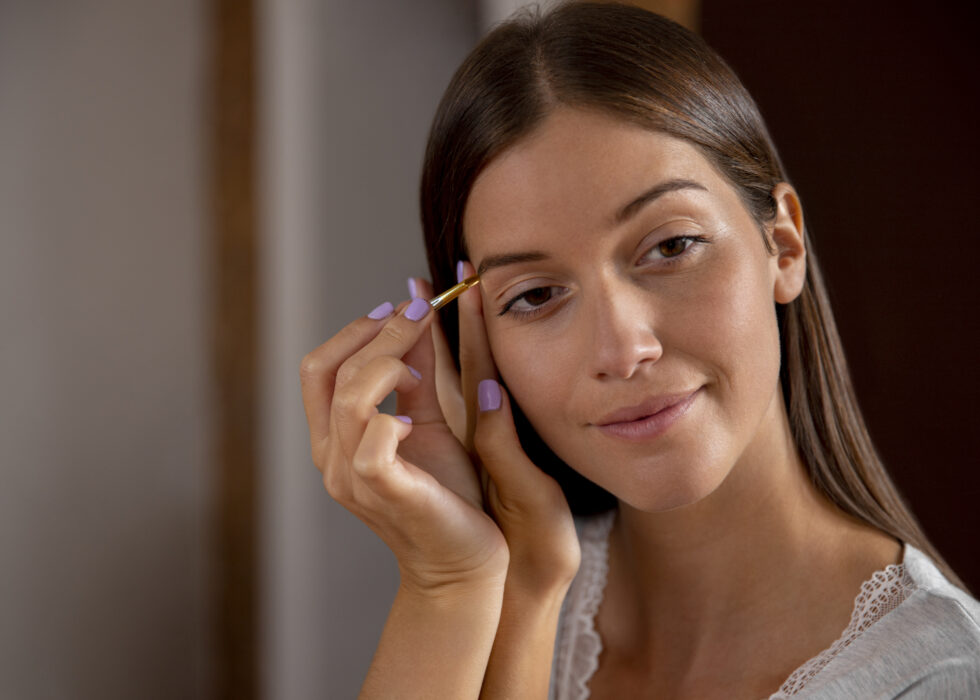
Brow Lamination for Straight Brows: Can It Create a More Lifted Look?
Straight brows have their own appeal. They can look soft, balanced and naturally understated.
But sometimes “straight” isn’t exactly the look you chose. Your brow hairs may simply grow sideways or downward, making the brows appear flatter than you’d like.
That’s where brow lamination can make a difference.
Brow Lamination for Straight Brows doesn’t create a brand-new arch or permanently change your natural brow structure. What it can do is reposition the hairs so they sit in a more lifted direction. For the right brows, that small shift can noticeably change the overall shape.
So, how much lift can you realistically expect?
Why Do Some Brows Naturally Look Straight?
Your brow shape isn’t determined by one thing.
The position of your brow bone matters, but so does the direction in which individual hairs grow. If most hairs naturally point sideways rather than upward, the brow can appear relatively flat.
Downward-growing hairs can make that effect even stronger.
This means two people with similar natural brow shapes can have very different-looking brows simply because their hair growth patterns aren’t the same.
Brow lamination focuses on that second part: the hairs themselves.
What Does Brow Lamination Actually Do?
Brow lamination is a treatment that makes brow hairs more flexible so they can be repositioned into a more uniform direction.
Think of what happens when you brush your eyebrows upward with a spoolie and suddenly see more shape.
The front looks fuller. The arch becomes easier to notice. The tail appears cleaner.
Then you leave the house and, several hours later, the hairs have started heading back to their favorite positions.
Lamination helps the brows maintain that styled effect for longer.
It doesn’t tattoo the skin or add new hairs. Your existing brow hairs are simply being redirected and styled.
Can Straight Brows Really Look More Lifted?
Yes, but there’s an important distinction between lifting the hairs and creating an entirely new brow shape.
If your brows look straight primarily because the hairs grow sideways or downward, repositioning them upward can create a noticeably more lifted appearance.
The upper edge of the brow may become more visible, and an existing subtle arch can sometimes appear stronger.
However, lamination cannot physically move the brow higher on your face.
It also can’t manufacture a dramatic arch if your natural brow structure doesn’t have one.
A realistic goal is a more open, groomed and lifted version of your natural brows—not completely different eyebrows.
Try This Before Booking
There’s a simple test you can do at home.
Take a clean spoolie and brush your brow hairs upward, following their natural shape rather than pushing every hair vertically.
Now look at your brows from a normal distance.
Do they appear fuller?
Does the arch look more noticeable?
Do your eyes seem slightly more open?
If brushing the hairs upward already creates a shape you like, Brow Lamination for Straight Brows may help you maintain a similar effect more easily.
If brushing makes almost no difference, lamination may not create the level of change you’re imagining.
What If Your Brow Hairs Grow Downward?
Downward-growing hairs are one of the reasons a naturally good brow shape can look flatter than it actually is.
They can also make the tail appear lower or less tidy.
Lamination can help redirect those hairs so they follow a more flattering pattern.
The result doesn’t necessarily need to be the extremely vertical “soap brow” style you may have seen online. A brow professional can position the hairs at softer angles for a groomed look that still feels natural.
That’s worth mentioning during your appointment.
“Lifted” doesn’t have to mean “standing straight up.”
Can Lamination Make Straight Brows Look Fuller Too?
Often, yes.
When hairs lie flat or overlap one another, they cover less visible space across the brow.
Brushing and repositioning them can spread those hairs more evenly. Suddenly, a brow that looked narrow may appear wider and fuller.
But there’s a limit.
Brow lamination cannot create hairs in completely bare areas. If you have significant gaps or very sparse sections, rearranging the existing hairs may not provide enough coverage.
In that situation, tinting or a permanent makeup technique may be worth discussing depending on your goals.
Brow Lamination vs. Brow Tinting
These treatments are easy to confuse because both can make eyebrows look more noticeable.
Their jobs are different.
Brow lamination changes direction. It helps reposition the natural hairs.
Brow tinting changes color. It darkens lighter brow hairs so they’re easier to see.
If your straight brows are already dark but lie flat, lamination addresses the more relevant problem.
If the shape is fine but lighter hairs make the brows look thin, tinting may be enough.
And if you have both concerns, ask a professional whether combining services would suit your brows.
What Happens During Brow Lamination?
During the treatment, professional solutions are used to make the brow hairs easier to manipulate and reposition.
The hairs are then brushed into the desired shape before being set.
This is why discussing your preferred finish beforehand matters.
Bring reference photos if you have them, but pay attention to the person’s natural brows in those photos. A dramatic arch created on someone else’s face isn’t necessarily achievable—or even flattering—on yours.
A better reference may simply be a photograph showing the degree of lift and softness you prefer.
What Happens After the Appointment?
Your brows may initially look particularly sleek and structured. The finish becomes more natural as you settle into styling them yourself.
Follow the aftercare provided by your brow professional. Because lamination chemically processes the brow hairs, treating them gently is important.
Avoid experimenting with random products immediately afterward simply because someone online recommended them.
Your technician knows which products were used and can give aftercare instructions accordingly.
Is Brow Lamination Permanent?
No.
Brow lamination is a temporary treatment. As your brow hairs continue through their natural growth cycle, the laminated effect gradually diminishes.
For someone experimenting with a more lifted brow, that can actually be useful.
You get to see how the shape works with your face without committing to a permanent change.
If you love it, you can repeat the treatment when appropriate.
If you don’t, your brows aren’t locked into that style.
Who Is Brow Lamination for Straight Brows Best Suited To?
It may be worth considering if your brows:
- Naturally grow sideways or downward
- Look more lifted when brushed upward
- Have enough hair but lack visible shape
- Frequently fall out of place after styling
- Look flatter than you’d prefer
- Need more structure rather than additional pigment
The condition of your brow hairs and skin also matters, so a professional assessment is useful before treatment.
A Lift Doesn’t Have to Mean a Dramatic Arch
This is probably the most important expectation to set.
Straight brows don’t need to become highly arched to look more lifted.
Sometimes changing the direction of the front hairs and slightly raising the middle and tail is enough to make the entire brow feel different.
That’s what makes Brow Lamination for Straight Brows interesting. You’re not necessarily changing your natural shape. You’re seeing what that shape looks like when the hairs actually work with it.
O’Some Brows offers brow services for clients across the Atlanta area. A consultation can help determine how much lift your natural growth pattern can realistically achieve and whether lamination is the right treatment for the result you want.
Frequently Asked Questions
1. Can brow lamination give straight eyebrows an arch?
Brow lamination can make an existing subtle arch more noticeable by repositioning the hairs, but it cannot completely change your natural brow structure or create a dramatic arch where one doesn’t naturally exist.
2. Does brow lamination work on downward-growing eyebrows?
It can help redirect downward or sideways-growing hairs into a more lifted and controlled position. The amount of change depends on your natural brows and hair pattern.
3. Will laminated brows have to stand straight up?
No. Brow hairs can be styled at different angles. If you prefer a softer result, tell your brow professional that you want a natural-looking lift rather than an extremely brushed-up finish.
4. Can brow lamination make straight brows look thicker?
Repositioning the existing hairs can spread them across more of the brow area, creating a fuller appearance. It cannot, however, create new hairs in bare areas.
5. Is brow lamination permanent?
No. Brow lamination is temporary. The effect gradually wears off as your natural brow hairs grow and return to their usual pattern.
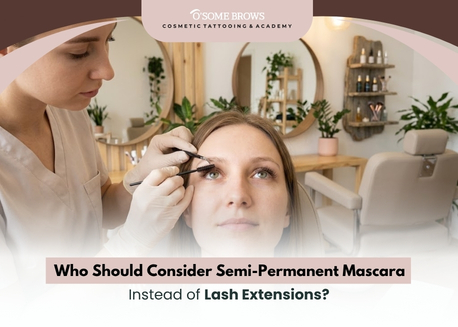
Who Should Consider Semi-Permanent Mascara Instead of Lash Extensions?
Not everyone who wants better-looking lashes wants more lashes.
Sometimes you like the length you already have. You just wish your lashes looked darker without mascara. Maybe extensions feel like too much maintenance, or you’re simply after something subtle enough to wear every day.
That’s where semi-permanent mascara enters the conversation.
When comparing Semi Permanent Mascara vs Lash Extensions, the biggest difference isn’t simply how long they last. It’s what you’re asking the treatment to change.
One enhances your natural lashes. The other adds to them.
Here’s how to figure out which approach sounds more like you.
First, What Is Semi-Permanent Mascara?
Semi-permanent mascara is a professional treatment that coats your natural eyelashes with a longer-lasting formula.
The result is darker, more defined lashes without applying and removing traditional mascara every day.
At O’Some Brows, semi-permanent mascara is applied to the natural lashes and can be used on the upper and lower lash lines. The treatment takes around 30 minutes, with results typically lasting approximately two to three weeks.
It’s particularly suited to someone who looks at their bare lashes and thinks, These are fine. I just wish they showed up more.
How Are Lash Extensions Different?
Lash extensions actually add something that wasn’t there before.
Individual extensions are attached to natural eyelashes to create additional length, volume or both. The final look can range from relatively natural to noticeably dramatic depending on the style chosen.
Because extensions are attached to your natural lashes, they gradually shed along with them. Maintenance appointments are usually needed if you want to keep the set looking consistently full.
So, when comparing the two:
- Semi-permanent mascara enhances your existing lashes.
- Lash extensions add extra length and volume to them.
That difference should guide most of your decision.
1. You Already Like Your Natural Lash Length
Take mascara out of the equation for a moment.
Are you actually unhappy with the length of your lashes?
If the answer is no, extensions may give you more than you’re looking for.
Semi-permanent mascara can make lighter lashes more noticeable from root to tip. Darkening them may be enough to bring out length that wasn’t particularly visible before.
It won’t physically make your lashes longer, but sometimes stronger definition is all that’s missing.
2. You Want a Natural Everyday Look
Not every beauty treatment needs to announce itself.
Some people want to walk into a room with visibly styled lashes. Others simply want to look slightly more awake before they’ve had coffee.
Semi-permanent mascara sits closer to the second category.
Because it works with your natural lashes, the result tends to feel familiar. They’re still your lashes, just darker and more defined.
Extensions offer far more freedom if you want noticeable volume or length.
When deciding between Semi Permanent Mascara vs Lash Extensions, ask yourself whether you want people to notice your lashes or simply notice your eyes a little more.
3. You’re Tired of Applying Mascara Every Morning
Regular mascara isn’t particularly difficult to use.
It’s the repetition that gets annoying.
Apply. Separate the lashes. Clean the mark on your eyelid. Check for smudging later. Remove it before bed.
Then do the whole thing again tomorrow.
O’Some Brows describes its semi-permanent mascara treatment as waterproof and smudge-resistant, making it an option for people who want to reduce that daily routine.
If your main goal is simply to stop reaching for a mascara tube every morning, you don’t necessarily need the added volume of extensions.
4. You Don’t Want Regular Lash Extension Maintenance
Lash extensions aren’t a one-and-done appointment if you want to maintain their appearance.
Natural lashes grow and shed, taking extensions with them. As that happens, gaps gradually appear and refill appointments become part of the routine.
Some people love the results enough that maintenance isn’t an issue.
Others realise they wanted low-maintenance lashes and accidentally signed themselves up for another beauty appointment every few weeks.
Semi-permanent mascara also fades and needs repeating if you want to maintain the effect, but it doesn’t involve maintaining a set of attached extensions.
That may suit someone who wants a simpler commitment.
5. You Exercise or Spend Plenty of Time Outdoors
Sweat and ordinary mascara don’t always have the happiest relationship.
Neither do humidity and eye makeup.
For active clients, the appeal of a longer-lasting lash coating is fairly obvious. You can head to a workout without first wondering whether you’ll leave with mascara under your eyes.
This can be particularly convenient during Atlanta’s warmer, humid months.
Of course, semi-permanent doesn’t mean “ignore all aftercare.” You’ll still need to follow the instructions provided after your appointment to help protect the result.
6. You Want Something for a Vacation
Vacations have a strange ability to turn a five-minute makeup routine into something you suddenly have absolutely no interest in doing.
Beach. Pool. Breakfast. Repeat.
Semi-permanent mascara can be useful when you want your natural lashes to stay defined without packing multiple eye products or applying mascara every morning.
Lash extensions can also be convenient for travel, especially if you want more dramatic lashes in photographs.
Again, it comes down to the look.
- Natural definition? Semi-permanent mascara.
- Extra length and volume? Extensions may be closer to what you have in mind.
What If You Want More Curl Too?
Darkness isn’t the only thing that makes lashes stand out.
Curl can make a significant difference.
O’Some Brows notes that semi-permanent mascara may be combined with services such as a lash lift and tint. A lash lift changes the positioning and curl of your natural lashes, while the mascara coating adds darker definition.
For someone who wants noticeable natural lashes without extensions, that combination may be worth discussing during a consultation.
When Are Lash Extensions the Better Option?
There are situations where semi-permanent mascara simply won’t deliver enough change.
If your natural lashes are very short and your main goal is noticeable length, mascara can only work with what’s already there.
The same applies if you want considerable volume.
Lash extensions provide much greater control over length, fullness and overall style because additional fibers are being attached.
So don’t choose semi-permanent mascara because it sounds easier and then expect extension-level results.
They’re different services for different goals.
Semi-Permanent Mascara in Atlanta
If you’re deciding between Semi Permanent Mascara vs Lash Extensions, start by looking at your natural lashes without makeup.
Do you want to change them, or simply make them easier to see?
O’Some Brows offers semi-permanent mascara alongside other lash services for clients in the Atlanta area, with locations listed in Marietta, Lawrenceville, and Johns Creek Town Center in Suwanee, Georgia.
A consultation can also help you decide whether semi-permanent mascara alone will give you enough definition or whether another lash service better matches the result you have in mind.
It’s Really About How Much Change You Want
Semi-permanent mascara isn’t a lighter version of lash extensions. And extensions aren’t simply mascara that lasts longer.
One works with your natural lashes.
The other adds to them.
If you already like your lashes and mainly want darker definition without a daily mascara routine, semi-permanent mascara makes sense to explore.
If you want noticeably longer, fuller or more dramatic lashes, extensions offer something mascara can’t.
The best treatment isn’t necessarily the one that creates the biggest transformation.
Sometimes it’s the one that solves the exact problem you had in the first place.
Frequently Asked Questions
1. What is the main difference between semi-permanent mascara and lash extensions?
Semi-permanent mascara coats and defines your existing eyelashes. Lash extensions attach additional fibers to natural lashes to create extra length and volume.
2. How long does semi-permanent mascara last?
O’Some Brows states that its semi-permanent mascara treatment typically lasts around two to three weeks, although individual results can vary.
3. Can semi-permanent mascara make short lashes longer?
It can make the full length of your natural lashes more visible, but it doesn’t physically extend them. If additional length is your main goal, lash extensions may be more suitable.
4. Can semi-permanent mascara be combined with a lash lift?
O’Some Brows notes that semi-permanent mascara can be paired with other lash treatments, including a lash lift and tint. Your technician can advise whether combining services is appropriate for your lashes.
5. Is semi-permanent mascara good for vacations?
It can be convenient for travel because the lashes remain darker and defined without daily mascara application. Follow the aftercare instructions provided by your technician to help maintain the treatment.
Can Lash Line Enhancement Replace Daily Eyeliner? What to Know Before Booking
For some people, eyeliner takes thirty seconds. For others, it’s a daily negotiation.
One eye looks perfect. The other somehow ends up thicker. You fix that one, and now the first needs fixing too. Five minutes later, you’ve accidentally created a much bolder look than you planned.
Lash line enhancement offers another option. Instead of drawing a visible line above the lashes every morning, pigment is placed along the lash line to create subtle, longer-lasting definition.
But can it actually replace your regular eyeliner?
If you’re considering Lash Line Enhancement Atlanta, the answer depends on what you expect your everyday eyeliner to do.
What Is Lash Line Enhancement?
Lash line enhancement is a form of permanent makeup in which pigment is carefully placed along the natural lash line.
Unlike traditional winged or graphic eyeliner, the goal isn’t necessarily to create an obvious line. The pigment sits close to the lashes, helping the lash base appear darker and more defined.
O’Some Brows describes the treatment as an “invisible eyeliner” effect. You get definition around the eyes without the result necessarily looking like you’ve drawn on eyeliner.
That distinction matters.
If your everyday makeup consists of a thin line simply to make your eyes stand out, lash line enhancement could potentially replace that step.
If you love a thick black wing? Keep your eyeliner pencil nearby.
What Does Lash Line Enhancement Actually Look Like?
Think less “makeup” and more “naturally defined.”
By adding pigment between and around the lash roots, the treatment creates the appearance of a darker lash line. This can also make the lashes themselves look more noticeable.
You’re not adding lashes. You’re not physically making them thicker either.
Instead, you’re reducing the visible skin between the lashes, which can make the entire lash line look denser.
The effect can be especially appealing when you’re wearing little or no makeup.
Your eyes still have some definition, even before mascara enters the picture.
Can It Replace Daily Eyeliner?
For the right person, yes.
But it depends entirely on your usual eyeliner style.
If You Wear Very Thin Eyeliner
Lash line enhancement may significantly reduce or even eliminate your need for daily liner.
The pigment provides consistent definition at the lash roots, so you don’t need to recreate that subtle line every morning.
If You Love Winged Eyeliner
You’ll probably still want regular eyeliner.
Lash line enhancement isn’t designed to give you a dramatic wing that changes with makeup trends or occasions.
You can still apply regular eyeliner over healed permanent makeup whenever you want a stronger look.
If You Rarely Wear Makeup
This is where the treatment can be particularly interesting.
Because the effect is subtle, it can give bare eyes a little more definition without making you look obviously “made up.”
You wake up with it. Go to the gym with it. Head out without makeup and it’s still there.
Lash Line Enhancement vs. Permanent Eyeliner
These terms sometimes get used interchangeably, but the intended look can be different.
Traditional permanent eyeliner may involve a more visible line above the lashes. It can be thicker, stronger and closer to the appearance of conventional eyeliner.
Lash line enhancement is usually much more understated.
Pigment is concentrated around the lash roots rather than being used to create a prominent makeup shape.
If your goal is “I want my eyes to look more defined,” lash line enhancement may be enough.
If your goal is “I want it to look like I’m wearing eyeliner every day,” discuss that clearly during your consultation.
What Happens During the Appointment?
Before the procedure begins, you’ll discuss the look you want with your artist.
This isn’t the moment to simply say, “Whatever you think.”
Explain how you normally wear eyeliner. Bring a photograph if necessary. A barely visible lash enhancement and a noticeable eyeliner effect are two very different outcomes.
The eye area is prepared, and numbing is generally used to make the treatment more comfortable. Pigment is then carefully applied along the lash line.
O’Some Brows notes that lash line enhancement appointments can take approximately one to two hours, including preparation and numbing.
Does Lash Line Enhancement Hurt?
The idea of anything being done near the eyes can make people nervous.
Numbing is used to help minimise discomfort, but individual sensitivity varies. You may feel pressure, vibration or some discomfort during the procedure.
The eyes can also appear slightly swollen or red immediately afterward.
If you’re particularly sensitive around your eyes, mention it during the consultation rather than waiting until the procedure has started.
What Is the Healing Process Like?
Fresh lash line enhancement can initially look darker or stronger than the healed result.
Some mild swelling or tenderness may occur after the appointment. As the area heals, the pigment softens and settles.
Avoid judging the final result after two days.
Permanent makeup takes time to heal, and the finished appearance may not become clear for several weeks.
Your artist will provide specific aftercare instructions. Follow them carefully.
That may mean temporarily avoiding eye makeup, excessive moisture, swimming, saunas, steam and certain eye-area treatments while healing.
And yes, even if you’re tempted to “fix” a tiny flaky area, leave it alone.
What About Contact Lenses?
If you wear contact lenses, let your artist know before your appointment.
You may be asked to remove them for the procedure and avoid wearing them for a period afterward while the eye area settles.
It can be useful to bring your glasses with you so you’re not trying to navigate the trip home half-blind.
How Long Does Lash Line Enhancement Last?
Lash line enhancement is considered a form of permanent makeup, but that doesn’t mean the pigment remains identical forever.
It gradually fades over time.
Skin characteristics, sun exposure, skincare products, lifestyle and pigment retention can all influence how the treatment ages. Refresh appointments may eventually be recommended if you want to maintain stronger definition.
The advantage is obvious: you’re thinking in terms of months or years rather than reapplying a line every morning.
Who Might Like Lash Line Enhancement?
The treatment may be worth considering if you:
- Wear subtle eyeliner almost every day
- Want your lash line to appear darker
- Prefer minimal makeup
- Struggle to apply eyeliner evenly
- Want definition that doesn’t smudge during the day
- Have an active lifestyle
- Want to shorten your morning routine
It can also be useful for someone who likes the appearance of eyeliner but doesn’t necessarily enjoy the process of applying it.
When Might Regular Eyeliner Be Better?
Regular eyeliner still wins on flexibility.
Black today. Brown tomorrow. Tiny wing for work. Dramatic cat eye on Saturday.
Permanent makeup can’t give you that level of daily experimentation.
If eyeliner is one of the parts of makeup you genuinely enjoy changing, lash line enhancement should be viewed as a base layer of definition, not necessarily a replacement.
You can always add conventional eyeliner once the area has completely healed.
Lash Line Enhancement in Atlanta
When researching Lash Line Enhancement Atlanta, look carefully at healed results rather than only freshly completed treatments.
Fresh pigment naturally appears stronger. Healed photographs give you a better idea of an artist’s actual style and how subtle the finished work can become.
O’Some Brows offers lash line enhancement among its permanent makeup services for Atlanta-area clients, with locations in Marietta, Lawrenceville, and Johns Creek Town Center in Suwanee, Georgia.
So, Can You Throw Away Your Eyeliner?
Maybe don’t throw it away just yet.
If your everyday eyeliner is simply a thin line used to make your lashes and eyes look more defined, lash line enhancement could remove that step from most mornings.
If you love changing your eyeliner or regularly wear dramatic wings, you’ll probably still use conventional makeup.
That’s what makes lash line enhancement useful. It doesn’t have to replace every eyeliner look you’ve ever worn.
It can simply give you a head start.
For anyone considering Lash Line Enhancement Atlanta, the best question to ask during your consultation is simple: Can this treatment recreate the amount of definition I normally wear every day?
Once you know that, deciding becomes much easier.
Frequently Asked Questions
1. Is lash line enhancement the same as eyeliner tattooing?
Both involve cosmetic pigment around the eyes, but lash line enhancement is generally designed to be subtler. Pigment is concentrated along the lash roots to create definition rather than an obvious eyeliner shape.
2. Can I still wear regular eyeliner after lash line enhancement?
Yes, once the area has fully healed. You can add conventional eyeliner whenever you want a thicker line, wing or more dramatic makeup look.
3. How long does a lash line enhancement appointment take?
O’Some Brows indicates that the treatment generally takes around one to two hours, including consultation, preparation and numbing.
4. Will lash line enhancement make my eyelashes thicker?
It doesn’t physically thicken or add eyelashes. Darkening the area around the lash roots can, however, make the lash line appear fuller and more defined.
5. Where can I get lash line enhancement near Atlanta?
O’Some Brows offers lash line enhancement for Atlanta-area clients and currently lists locations in Marietta, Lawrenceville, and Johns Creek Town Center in Suwanee, Georgia.