
Lash Lift vs. Lash Extensions: Which Training Course Should Beginners Choose in Atlanta?
If you’re thinking about starting a career in lash artistry, one of the first decisions you’ll face is choosing between lash lift training and eyelash extension training. Both treatments are popular, but they involve different techniques, products and levels of precision.
For beginners exploring lash training courses in Atlanta, the right choice depends on the kind of services you want to offer, how you prefer to work and how much time you’re ready to invest in learning.
Let’s break down the differences so you can make a more informed decision.
What Is Lash Lift Training?
A lash lift is a treatment that curls and lifts a client’s natural lashes, creating a more open and defined appearance without adding extensions. The process uses specially formulated lifting solutions and silicone shields to reshape the natural lashes.
Lash lift training focuses on understanding the natural lash structure, selecting the right shield, applying lifting solutions correctly and achieving a consistent curl.
A beginner’s course typically covers:
- Natural lash anatomy and growth cycles
- Shield selection for different lash lengths and eye shapes
- Product knowledge and lifting chemistry
- Step-by-step lash lift application
- Lash tinting and aftercare
- Hygiene, sanitation and client safety
Lash lifts can be a good starting point for someone who wants to learn a focused treatment with a relatively straightforward service process. However, working around the eyes still requires careful product handling and a strong understanding of safety.
What Is Lash Extension Training?
Lash extensions involve attaching individual synthetic lashes or fans to a client’s natural lashes using professional adhesive. The goal is to create a customised look, ranging from subtle enhancement to fuller, more dramatic styles.
Unlike lash lifts, extension application requires you to work with individual natural lashes and maintain precise placement throughout the service.
A comprehensive lash extension course generally covers:
- Classic, hybrid and volume lash techniques
- Lash mapping and styling for different eye shapes
- Isolation and adhesive application
- Fan creation and attachment
- Lash health and retention
- Refills, removal and aftercare
- Client consultation and photography
The learning curve can feel steeper at first. Isolation, adhesive control and consistent placement take plenty of practice. But if you enjoy detailed, hands-on work, lash extensions can open the door to a wider range of customised services.
Lash Lift vs. Lash Extensions: Key Differences
| Factor | Lash Lift Training | Lash Extension Training |
| Treatment | Lifts natural lashes | Adds synthetic lashes or fans |
| Main skill | Shield selection and solution placement | Isolation, attachment and lash mapping |
| Learning curve | Often easier to begin with | Requires more detailed practice |
| Course duration | Usually shorter | Usually longer |
| Maintenance | Clients may return for repeat lifts | Clients often need refills |
| Styling options | Focuses on the natural lash curl | Offers a wider range of lengths and volumes |
| Ideal for | Beginners interested in natural enhancement | Beginners interested in detailed lash artistry |
Which Course Should Beginners Choose?
There isn’t one right answer for everyone. Here’s how to decide.
Choose Lash Lift Training If…
You want to start with a focused treatment and learn how to enhance natural lashes. Lash lift training may suit you if:
- You’re completely new to the beauty industry.
- You prefer working with natural lashes rather than adding extensions.
- You want to learn a treatment that can complement other beauty services.
- You’re interested in offering natural-looking results.
A lash lift course can help you build your foundation in lash anatomy, product handling and client safety before exploring other services.
Choose Lash Extension Training If…
You’re drawn to the artistry involved in creating customised lash looks. Extension training may be the better fit if:
- You enjoy detailed, precision-based work.
- You want to offer classic, hybrid and volume styles.
- You’re interested in building a dedicated lash clientele.
- You’re willing to spend time practising isolation and application techniques.
Lash extensions may take longer to master, but the range of styling possibilities makes them appealing to aspiring lash artists.
Can You Learn Both?
Absolutely. In fact, learning both treatments can help you build a more versatile service menu.
You could begin with lash lift training to understand natural lash anatomy and product handling, then move on to extensions once you’re comfortable. Alternatively, if extensions are your main career goal, you can start with an extension course and add lash lifts later.
The sequence should reflect your career plans rather than a belief that one treatment is a compulsory prerequisite for the other.
What Should You Look for in Lash Training Courses in Atlanta?
Choosing a course based on its duration or certificate alone may not give you the full picture. Pay attention to the training experience.
Look for a programme that includes:
- Hands-on practice: You should have an opportunity to apply what you learn, not just watch demonstrations.
- Eye and lash health: Safety, hygiene and product handling should be central to the curriculum.
- Personalised guidance: Small classes can make it easier to receive feedback on your technique.
- Aftercare education: You should know how to explain maintenance and aftercare to clients.
- Business fundamentals: Client consultations, photography and marketing can help you prepare for working professionally.
At O’some Brows, the lash training programme includes eyelash lifting and extension courses designed for beginners as well as existing beauty professionals. The academy offers practical instruction covering areas such as lash health, application techniques, product knowledge and aftercare.
The eyelash lifting course is listed as a one-day programme, while the eyelash extension course runs for approximately 2.5 days. Course details and availability can be confirmed directly with the academy.
Start Your Lash Artistry Journey With the Right Training
If you’re a beginner, a lash lift course can be a practical introduction to working with natural lashes. If your goal is to create customised lash sets and build a career focused on extensions, extension training may be the more suitable investment.
Whichever route you choose, remember that completing a course is only the beginning. Consistent practice, safe application and continued learning are what help turn your training into a professional skill.
Explore the lash training courses at O’some Brows to find a programme that aligns with your goals.
Frequently Asked Questions
1. Can beginners enrol in lash training courses in Atlanta without prior experience?
Yes. Many lash training courses are designed for beginners with no previous experience. Check the course requirements before enrolling to ensure the programme covers the fundamentals.
2. Is lash lift training easier than lash extension training?
Lash lift training is often easier to begin with because the technique involves lifting natural lashes rather than attaching extensions individually. However, both treatments require precision, product knowledge and strict safety practices.
3. How long does it take to complete lash training?
Course duration varies by treatment and academy. At O’some Brows, the lash lift course is listed as a one-day programme, while eyelash extension training runs for approximately 2.5 days.
4. Can I offer lash lifts and lash extensions after completing both courses?
You can work towards offering both services after completing the relevant training, provided you meet applicable licensing and regulatory requirements. You should also continue practising until you can perform each treatment safely and consistently.
5. Which lash course is better for starting a beauty business?
Both can be useful. Lash lifts may be a good starting service for a beginner, while extensions offer more styling options. Your choice should depend on your interests, target clientele and the services you want your business to provide.
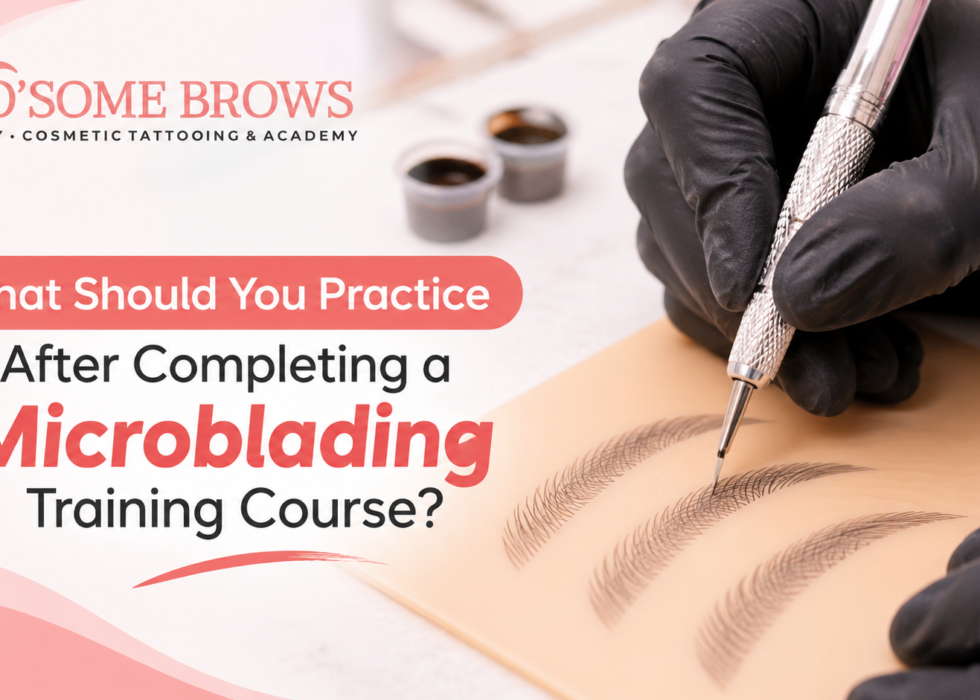
What Should You Practice After Completing a Microblading Training Course?
Completing a microblading training course feels like a big milestone. You’ve learnt brow mapping, pigment selection, stroke techniques and the basics of working with clients. You may even have completed your first practical session.
But here’s something every new artist should understand: finishing your training doesn’t mean you’ve finished learning.
Microblading is a skill that develops through repetition. The difference between knowing how a technique works and performing it consistently comes down to practice, observation and patience.
If you’ve recently completed a microblading training course, here are the skills worth focusing on before taking the next step in your career.
1. Practise Brow Mapping Until It Feels Natural
Brow mapping is one of the first skills to revisit after training.
It involves designing a brow shape that works with the client’s facial structure, natural brow growth and desired appearance. Even a technically good microblading treatment can look unbalanced if the initial mapping isn’t right.
Start by practising:
- Identifying the brow’s starting point, arch and tail
- Creating symmetrical outlines
- Measuring brow proportions
- Working with different face shapes
- Drawing both brows with consistent proportions
Use mapping tools, pencils and practice sheets to repeat the process.
Don’t rush to make the brows look identical. Natural faces aren’t perfectly symmetrical, and your goal should be to create a balanced design that suits the individual.
The more mapping you practise, the less you’ll have to rely on guesswork during consultations.
2. Work on Hair Stroke Patterns
Microblading is known for its fine, hair-like strokes. Creating them consistently takes time.
On practice skin, focus on developing different stroke patterns rather than repeating the same few lines.
Practise:
- Straight strokes
- Curved strokes
- Short and long strokes
- Front brow patterns
- Arch and tail patterns
- Natural transitions between strokes
Pay attention to how the strokes flow together.
A brow shouldn’t look like a collection of lines drawn in the same direction. The pattern needs to follow the natural growth of brow hair.
O’Some Brows training curriculum includes understanding hair stroke placement, brow design and practical work on practice skin. These are skills worth continuing to refine after the course.
3. Improve Your Hand Control
A steady hand is essential for microblading.
Your strokes should look deliberate rather than shaky, uneven or overly repetitive. This is something you build gradually, not something that automatically happens after receiving a certificate.
Practice skin gives you a space to work on hand movement and tool handling without working on a live client.
Focus on controlled movements and consistency. Avoid trying to increase your speed too early.
The goal at this stage isn’t to finish a brow in record time. It’s to develop the control needed to produce clean, consistent work.
Remember that practice skin doesn’t perfectly replicate human skin. Technique, pressure and depth must be developed through appropriate supervised training before performing treatments on clients.
4. Understand Pigment Selection and Colour Theory
Choosing a pigment isn’t simply about matching the client’s hair colour.
Skin undertones, natural brow colour, the desired result and how pigment may heal all influence the selection.
After completing your microblading training course, spend time revisiting colour theory.
Learn to identify warm, cool and neutral undertones. Practise understanding how different pigment shades interact and why a colour that looks suitable in the bottle may not produce the same appearance after healing.
You should also become familiar with your training materials and the manufacturer’s pigment guidance.
Colour selection becomes easier when you understand the reasoning behind it instead of relying on memorised combinations.
5. Study Different Brow Shapes
Not every client wants the same eyebrow.
Some prefer a soft, natural brow. Others want a more defined arch or a straighter shape.
Practise designing brows for different preferences and facial structures. Use photographs, drawing exercises and mapping sheets to explore different designs.
This will help you become more adaptable.
A good artist doesn’t simply recreate one signature brow on every client. They understand how to adjust the design according to the person sitting in front of them.
6. Revisit Skin Anatomy and Contraindications
Technical practice is important, but so is understanding the skin you’re working with.
Microblading is a cosmetic tattooing procedure that involves the skin. Artists need to understand skin anatomy, healing, hygiene and the factors that may affect treatment suitability.
Review your training notes on:
- Skin structure and healing
- Identifying potential contraindications
- Infection prevention
- Hygiene and sanitation
- Pigment handling
- Client consultation and consent
- Aftercare instructions
If a client presents with a condition that may affect their suitability for treatment, don’t make assumptions. Follow your training protocols and seek appropriate professional guidance.
Knowing when not to perform a treatment is part of becoming a responsible artist.
7. Practise Client Consultation Skills
A beautiful brow design begins before the procedure.
During a consultation, you need to understand what the client wants, explain what the treatment can realistically achieve and discuss relevant risks and aftercare.
You can practise consultation scenarios with friends or fellow students without performing a treatment.
For example, imagine a client asks for extremely dark, sharply defined brows despite having naturally light and sparse hair.
How would you explain the options?
What questions would you ask?
How would you manage expectations?
These conversations help prepare you for situations that cannot be solved with technical skill alone.
8. Build a Portfolio of Your Practice Work
Documenting your progress can be surprisingly useful.
Take clear photographs of your practice skins and completed brow designs. Keep them organised so you can compare earlier work with newer attempts.
Look for improvements in:
- Stroke consistency
- Brow symmetry
- Design proportions
- Pattern flow
- Overall neatness
You can also ask your trainer for feedback on specific areas rather than simply asking whether your work looks good.
A portfolio should eventually include properly documented client work, with appropriate consent. Practice skin photographs can demonstrate your learning process, but they shouldn’t be presented as actual client results.
9. Don’t Rush Into Working on Clients
It’s natural to want to start earning after completing a course.
However, microblading requires more than a certificate. You need consistent technique, appropriate supervision and compliance with the regulations that apply to your location.
Before offering treatments, make sure you understand the licensing, facility, insurance and health requirements relevant to your area.
Practise on artificial skin first. Any live-model practice should take place only when permitted and under the appropriate supervision and conditions.
O’Some Brows Academy’s training covers practical technique, hygiene, client communication and business considerations. Its approach also emphasises continued learning beyond the initial training experience.
Your Training Is the Starting Point
Completing a microblading training course gives you the foundation. What happens next depends on how you use it.
Spend time improving your mapping. Repeat your stroke patterns. Study colour theory. Learn to recognise when a client may not be suitable for a treatment.
Most importantly, don’t confuse speed with skill.
The artists who develop strong techniques are often the ones willing to go back to the basics, identify what needs improvement and practise with intention.
If you’re looking to build your skills further, O’Some Brows Academy offers cosmetic tattooing training in Atlanta, including microblading and other permanent makeup techniques. Continued education and supervised practical experience can help you build a stronger foundation as you progress.
Frequently Asked Questions
1. What should I practise first after completing a microblading training course?
Start with brow mapping and hair stroke patterns on artificial practice skin. These foundational skills help you develop design accuracy and hand control before progressing to more advanced practice.
2. How much should I practise after microblading training?
There isn’t a universal number of hours. Consistent, focused practice is more useful than rushing through a large number of repetitions. Your trainer can help assess when your technique is ready to progress.
3. Can I practise microblading on real clients immediately after training?
Only when you meet the applicable legal, licensing, safety and supervision requirements. Completing a course does not automatically grant permission to perform treatments in every location.
4. Why is brow mapping important for microblading artists?
Brow mapping helps establish the shape, proportions and symmetry of the brows before pigment application. It provides a design foundation that can be customised to the client’s facial features and preferences.
5. Does a microblading training course provide all the skills needed to become an expert?
A course provides foundational knowledge and practical instruction. Developing expertise takes continued practice, feedback, experience, professional development and a strong understanding of client safety.

Brow Lamination for Straight Brows: Can It Create a More Lifted Look?
Straight brows have their own appeal. They can look soft, balanced and naturally understated.
But sometimes “straight” isn’t exactly the look you chose. Your brow hairs may simply grow sideways or downward, making the brows appear flatter than you’d like.
That’s where brow lamination can make a difference.
Brow Lamination for Straight Brows doesn’t create a brand-new arch or permanently change your natural brow structure. What it can do is reposition the hairs so they sit in a more lifted direction. For the right brows, that small shift can noticeably change the overall shape.
So, how much lift can you realistically expect?
Why Do Some Brows Naturally Look Straight?
Your brow shape isn’t determined by one thing.
The position of your brow bone matters, but so does the direction in which individual hairs grow. If most hairs naturally point sideways rather than upward, the brow can appear relatively flat.
Downward-growing hairs can make that effect even stronger.
This means two people with similar natural brow shapes can have very different-looking brows simply because their hair growth patterns aren’t the same.
Brow lamination focuses on that second part: the hairs themselves.
What Does Brow Lamination Actually Do?
Brow lamination is a treatment that makes brow hairs more flexible so they can be repositioned into a more uniform direction.
Think of what happens when you brush your eyebrows upward with a spoolie and suddenly see more shape.
The front looks fuller. The arch becomes easier to notice. The tail appears cleaner.
Then you leave the house and, several hours later, the hairs have started heading back to their favorite positions.
Lamination helps the brows maintain that styled effect for longer.
It doesn’t tattoo the skin or add new hairs. Your existing brow hairs are simply being redirected and styled.
Can Straight Brows Really Look More Lifted?
Yes, but there’s an important distinction between lifting the hairs and creating an entirely new brow shape.
If your brows look straight primarily because the hairs grow sideways or downward, repositioning them upward can create a noticeably more lifted appearance.
The upper edge of the brow may become more visible, and an existing subtle arch can sometimes appear stronger.
However, lamination cannot physically move the brow higher on your face.
It also can’t manufacture a dramatic arch if your natural brow structure doesn’t have one.
A realistic goal is a more open, groomed and lifted version of your natural brows—not completely different eyebrows.
Try This Before Booking
There’s a simple test you can do at home.
Take a clean spoolie and brush your brow hairs upward, following their natural shape rather than pushing every hair vertically.
Now look at your brows from a normal distance.
Do they appear fuller?
Does the arch look more noticeable?
Do your eyes seem slightly more open?
If brushing the hairs upward already creates a shape you like, Brow Lamination for Straight Brows may help you maintain a similar effect more easily.
If brushing makes almost no difference, lamination may not create the level of change you’re imagining.
What If Your Brow Hairs Grow Downward?
Downward-growing hairs are one of the reasons a naturally good brow shape can look flatter than it actually is.
They can also make the tail appear lower or less tidy.
Lamination can help redirect those hairs so they follow a more flattering pattern.
The result doesn’t necessarily need to be the extremely vertical “soap brow” style you may have seen online. A brow professional can position the hairs at softer angles for a groomed look that still feels natural.
That’s worth mentioning during your appointment.
“Lifted” doesn’t have to mean “standing straight up.”
Can Lamination Make Straight Brows Look Fuller Too?
Often, yes.
When hairs lie flat or overlap one another, they cover less visible space across the brow.
Brushing and repositioning them can spread those hairs more evenly. Suddenly, a brow that looked narrow may appear wider and fuller.
But there’s a limit.
Brow lamination cannot create hairs in completely bare areas. If you have significant gaps or very sparse sections, rearranging the existing hairs may not provide enough coverage.
In that situation, tinting or a permanent makeup technique may be worth discussing depending on your goals.
Brow Lamination vs. Brow Tinting
These treatments are easy to confuse because both can make eyebrows look more noticeable.
Their jobs are different.
Brow lamination changes direction. It helps reposition the natural hairs.
Brow tinting changes color. It darkens lighter brow hairs so they’re easier to see.
If your straight brows are already dark but lie flat, lamination addresses the more relevant problem.
If the shape is fine but lighter hairs make the brows look thin, tinting may be enough.
And if you have both concerns, ask a professional whether combining services would suit your brows.
What Happens During Brow Lamination?
During the treatment, professional solutions are used to make the brow hairs easier to manipulate and reposition.
The hairs are then brushed into the desired shape before being set.
This is why discussing your preferred finish beforehand matters.
Bring reference photos if you have them, but pay attention to the person’s natural brows in those photos. A dramatic arch created on someone else’s face isn’t necessarily achievable—or even flattering—on yours.
A better reference may simply be a photograph showing the degree of lift and softness you prefer.
What Happens After the Appointment?
Your brows may initially look particularly sleek and structured. The finish becomes more natural as you settle into styling them yourself.
Follow the aftercare provided by your brow professional. Because lamination chemically processes the brow hairs, treating them gently is important.
Avoid experimenting with random products immediately afterward simply because someone online recommended them.
Your technician knows which products were used and can give aftercare instructions accordingly.
Is Brow Lamination Permanent?
No.
Brow lamination is a temporary treatment. As your brow hairs continue through their natural growth cycle, the laminated effect gradually diminishes.
For someone experimenting with a more lifted brow, that can actually be useful.
You get to see how the shape works with your face without committing to a permanent change.
If you love it, you can repeat the treatment when appropriate.
If you don’t, your brows aren’t locked into that style.
Who Is Brow Lamination for Straight Brows Best Suited To?
It may be worth considering if your brows:
- Naturally grow sideways or downward
- Look more lifted when brushed upward
- Have enough hair but lack visible shape
- Frequently fall out of place after styling
- Look flatter than you’d prefer
- Need more structure rather than additional pigment
The condition of your brow hairs and skin also matters, so a professional assessment is useful before treatment.
A Lift Doesn’t Have to Mean a Dramatic Arch
This is probably the most important expectation to set.
Straight brows don’t need to become highly arched to look more lifted.
Sometimes changing the direction of the front hairs and slightly raising the middle and tail is enough to make the entire brow feel different.
That’s what makes Brow Lamination for Straight Brows interesting. You’re not necessarily changing your natural shape. You’re seeing what that shape looks like when the hairs actually work with it.
O’Some Brows offers brow services for clients across the Atlanta area. A consultation can help determine how much lift your natural growth pattern can realistically achieve and whether lamination is the right treatment for the result you want.
Frequently Asked Questions
1. Can brow lamination give straight eyebrows an arch?
Brow lamination can make an existing subtle arch more noticeable by repositioning the hairs, but it cannot completely change your natural brow structure or create a dramatic arch where one doesn’t naturally exist.
2. Does brow lamination work on downward-growing eyebrows?
It can help redirect downward or sideways-growing hairs into a more lifted and controlled position. The amount of change depends on your natural brows and hair pattern.
3. Will laminated brows have to stand straight up?
No. Brow hairs can be styled at different angles. If you prefer a softer result, tell your brow professional that you want a natural-looking lift rather than an extremely brushed-up finish.
4. Can brow lamination make straight brows look thicker?
Repositioning the existing hairs can spread them across more of the brow area, creating a fuller appearance. It cannot, however, create new hairs in bare areas.
5. Is brow lamination permanent?
No. Brow lamination is temporary. The effect gradually wears off as your natural brow hairs grow and return to their usual pattern.
Eyebrow Tinting for Light Brows: What Kind of Difference Can It Make?
Eyebrow Tinting for Light Brows: What Kind of Difference Can It Make?
Your eyebrows can be full and still look sparse.
It sounds contradictory, but light brow hairs have a habit of disappearing against the skin. Stand close to the mirror and the hairs are clearly there. Take a few steps back and suddenly half your brow seems to have vanished.
This is exactly where tinting can be useful.
Eyebrow Tinting for Light Brows doesn’t add hair, tattoo the skin or completely redesign your eyebrows. It simply makes existing hairs easier to see. Yet for naturally blonde, light brown, gray or faded brows, that change in color can make a surprisingly noticeable difference.
Why Can Light Brows Look Thinner Than They Are?
Brow fullness isn’t only about how many hairs you have.
Contrast matters too.
When brow hairs are close in color to your skin, particularly the fine hairs around the edges and tail, they don’t create much visual definition. You may have a perfectly good natural shape that simply isn’t obvious.
That’s why filling light brows with a pencil can make such an immediate difference. You’re adding contrast.
Tinting works with a similar idea, except instead of drawing color onto the skin every morning, it darkens the natural hairs themselves.
What Exactly Does Eyebrow Tinting Do?
During eyebrow tinting, a semi-permanent tint is applied to the brow hairs to deepen their color.
The shade shouldn’t simply be “as dark as possible.” It should be selected according to your natural hair, complexion and the level of definition you want.
Once those lighter hairs become more visible, several things can happen at once.
The tail may suddenly look longer. The arch can become clearer. Fine hairs around the edges start contributing to the overall shape.
Nothing new has actually been added.
You’re simply seeing more of the brow you already had.
How Much Difference Can Tinting Make?
That depends heavily on what your natural brows look like before treatment.
Someone with plenty of very light hairs may see a significant change. Their brows can appear noticeably fuller once those hairs have enough color to stand out.
Someone with genuinely sparse brows may see a smaller difference.
That’s an important distinction.
Eyebrow Tinting for Light Brows works best when lightness is the main reason the brows appear thin. If there are areas where very little or no hair grows, tint can’t fill those spaces.
Before booking, look closely at the areas that bother you.
Is there hair there that’s difficult to see?
Or is there actually a gap?
The answer can tell you a lot about what tinting can realistically achieve.
Can Tinting Make the Brow Shape Look Better?
It can make your existing shape much clearer.
Light brows sometimes appear uneven because certain sections are more visible than others. Perhaps the front looks reasonably defined but the tail almost disappears. Or one brow contains lighter hairs that make it seem thinner than the other.
Tinting can create more consistent color from one section to another.
Once the entire brow is visible, the shape may look more balanced even before additional styling.
Professional shaping can also be paired with tinting when appropriate to clean up hairs outside the desired brow outline.
Will My Brows Look Too Dark?
This is probably one of the biggest concerns people with light brows have.
You’ve spent years with barely visible eyebrows. Suddenly seeing darker brows in the mirror can feel dramatic, even when everyone else thinks they look completely normal.
The goal of professional tinting isn’t automatically to create dark brown brows.
A suitable shade should complement your natural coloring and desired result. You can also discuss whether you want a very subtle enhancement or stronger definition before the treatment begins.
Freshly tinted brows may initially appear stronger than you’re accustomed to, but the effect softens as the tint gradually fades.
Tinting vs. Filling Your Brows With Makeup
A brow pencil gives you control every single day.
You can make your brows darker, lighter, thicker or more defined depending on your makeup.
The downside?
You have to do it again tomorrow.
Tinting removes some of that repetition. If the main reason you fill your brows is to make pale hairs visible, you may find yourself needing much less brow makeup afterward.
You can still use a pencil or gel whenever you want extra definition.
Tinting doesn’t take that option away. It simply gives you a more visible starting point.
What If My Brows Are Light and Sparse?
This is where you need to separate two concerns.
Tinting can address lightness.
It cannot fully address missing hair.
If your brows contain significant gaps, tinting the remaining hairs may improve their overall appearance but won’t create strands in empty areas.
O’Some Brows also offers permanent makeup options such as Nano Brows, which use fine pigment strokes designed to imitate natural brow hairs. Someone with very sparse brows may want to discuss whether a treatment like this better matches their goal.
You don’t necessarily need the most permanent option, though.
If you’re unsure, trying tinting first can show you how much difference darker natural hairs make.
You may discover it’s enough.
What About Gray Brow Hairs?
Gray or lighter brow hairs can change the overall appearance of the brows even when density hasn’t changed.
Tinting may help create a more consistent tone across the brow, depending on your natural hairs and the tint used.
If gray coverage is your primary concern, mention it during the consultation rather than assuming every tint behaves identically on every hair type.
The technician can assess your brows and discuss what result is realistic.
How Long Does Eyebrow Tinting Last?
Eyebrow tinting isn’t permanent.
The color gradually fades as you wash your face and your brow hairs naturally grow and shed. Results can commonly last several weeks, although the exact duration varies from person to person.
Skincare products, cleansing habits, sun exposure and your individual hair cycle can all affect how quickly the tint fades.
For someone trying darker brows for the first time, the temporary nature can be reassuring.
It’s a change, not a lifetime commitment.
Who Is Eyebrow Tinting for Light Brows Best For?
Tinting may be particularly useful if:
- Your brows are naturally blonde or light brown
- Fine brow hairs disappear against your skin
- Your brow tails are difficult to see
- Gray hairs make the color look uneven
- You use pencil mainly to darken your brows
- You want more definition without cosmetic tattooing
- Your brows look much fuller when the hairs are made darker
If the main concern is the direction of your hairs rather than their color, another treatment such as brow lamination may be more relevant.
Sometimes the Hair Isn’t Missing. It’s Just Hard to See.
That’s the simplest way to understand the value of Eyebrow Tinting for Light Brows.
A brow can look incomplete even when most of the necessary hairs are already there. Giving those hairs more color allows them to contribute to the shape.
The result doesn’t need to be dramatically darker eyebrows.
It might simply mean a tail that no longer disappears in photographs. An arch that’s visible without pencil. Brows that still look like yours when you’re not wearing makeup.
O’Some Brows offers eyebrow tinting among its brow services for clients across the Atlanta area. A professional consultation can help determine whether adding color to your natural hairs will provide enough definition or whether another brow treatment would better address what you’re seeing in the mirror.
Frequently Asked Questions
1. Does eyebrow tinting work well on very light eyebrows?
Yes, tinting can be particularly noticeable on light brows because it makes fine, pale hairs easier to see. The amount of improvement depends on how much natural brow hair you have.
2. Will eyebrow tinting make my brows look thicker?
It can make them appear thicker by darkening hairs that were previously difficult to see. It does not physically increase the amount of brow hair.
3. Can I choose how dark my eyebrow tint will be?
The tint shade can be selected according to your natural coloring and preferred level of definition. Discuss the result you want with your brow professional before treatment.
4. Can eyebrow tinting fill gaps in my brows?
Not if there is no hair in the area. Tinting only colors existing hairs. Significant gaps may require makeup or another brow treatment if you want the appearance of additional hair.
5. Can I still use brow makeup after tinting?
Yes. Tinting can reduce how much brow makeup you need for everyday definition, but you can still use pencils, powders or gels whenever you want a stronger or more styled look.
Brow Lamination for Straight Brows: Can It Create a More Lifted Look?
Straight brows have their own appeal. They can look soft, balanced and naturally understated.
But sometimes “straight” isn’t exactly the look you chose. Your brow hairs may simply grow sideways or downward, making the brows appear flatter than you’d like.
That’s where brow lamination can make a difference.
Brow Lamination for Straight Brows doesn’t create a brand-new arch or permanently change your natural brow structure. What it can do is reposition the hairs so they sit in a more lifted direction. For the right brows, that small shift can noticeably change the overall shape.
So, how much lift can you realistically expect?
Why Do Some Brows Naturally Look Straight?
Your brow shape isn’t determined by one thing.
The position of your brow bone matters, but so does the direction in which individual hairs grow. If most hairs naturally point sideways rather than upward, the brow can appear relatively flat.
Downward-growing hairs can make that effect even stronger.
This means two people with similar natural brow shapes can have very different-looking brows simply because their hair growth patterns aren’t the same.
Brow lamination focuses on that second part: the hairs themselves.
What Does Brow Lamination Actually Do?
Brow lamination is a treatment that makes brow hairs more flexible so they can be repositioned into a more uniform direction.
Think of what happens when you brush your eyebrows upward with a spoolie and suddenly see more shape.
The front looks fuller. The arch becomes easier to notice. The tail appears cleaner.
Then you leave the house and, several hours later, the hairs have started heading back to their favorite positions.
Lamination helps the brows maintain that styled effect for longer.
It doesn’t tattoo the skin or add new hairs. Your existing brow hairs are simply being redirected and styled.
Can Straight Brows Really Look More Lifted?
Yes, but there’s an important distinction between lifting the hairs and creating an entirely new brow shape.
If your brows look straight primarily because the hairs grow sideways or downward, repositioning them upward can create a noticeably more lifted appearance.
The upper edge of the brow may become more visible, and an existing subtle arch can sometimes appear stronger.
However, lamination cannot physically move the brow higher on your face.
It also can’t manufacture a dramatic arch if your natural brow structure doesn’t have one.
A realistic goal is a more open, groomed and lifted version of your natural brows—not completely different eyebrows.
Try This Before Booking
There’s a simple test you can do at home.
Take a clean spoolie and brush your brow hairs upward, following their natural shape rather than pushing every hair vertically.
Now look at your brows from a normal distance.
Do they appear fuller?
Does the arch look more noticeable?
Do your eyes seem slightly more open?
If brushing the hairs upward already creates a shape you like, Brow Lamination for Straight Brows may help you maintain a similar effect more easily.
If brushing makes almost no difference, lamination may not create the level of change you’re imagining.
What If Your Brow Hairs Grow Downward?
Downward-growing hairs are one of the reasons a naturally good brow shape can look flatter than it actually is.
They can also make the tail appear lower or less tidy.
Lamination can help redirect those hairs so they follow a more flattering pattern.
The result doesn’t necessarily need to be the extremely vertical “soap brow” style you may have seen online. A brow professional can position the hairs at softer angles for a groomed look that still feels natural.
That’s worth mentioning during your appointment.
“Lifted” doesn’t have to mean “standing straight up.”
Can Lamination Make Straight Brows Look Fuller Too?
Often, yes.
When hairs lie flat or overlap one another, they cover less visible space across the brow.
Brushing and repositioning them can spread those hairs more evenly. Suddenly, a brow that looked narrow may appear wider and fuller.
But there’s a limit.
Brow lamination cannot create hairs in completely bare areas. If you have significant gaps or very sparse sections, rearranging the existing hairs may not provide enough coverage.
In that situation, tinting or a permanent makeup technique may be worth discussing depending on your goals.
Brow Lamination vs. Brow Tinting
These treatments are easy to confuse because both can make eyebrows look more noticeable.
Their jobs are different.
Brow lamination changes direction. It helps reposition the natural hairs.
Brow tinting changes color. It darkens lighter brow hairs so they’re easier to see.
If your straight brows are already dark but lie flat, lamination addresses the more relevant problem.
If the shape is fine but lighter hairs make the brows look thin, tinting may be enough.
And if you have both concerns, ask a professional whether combining services would suit your brows.
What Happens During Brow Lamination?
During the treatment, professional solutions are used to make the brow hairs easier to manipulate and reposition.
The hairs are then brushed into the desired shape before being set.
This is why discussing your preferred finish beforehand matters.
Bring reference photos if you have them, but pay attention to the person’s natural brows in those photos. A dramatic arch created on someone else’s face isn’t necessarily achievable—or even flattering—on yours.
A better reference may simply be a photograph showing the degree of lift and softness you prefer.
What Happens After the Appointment?
Your brows may initially look particularly sleek and structured. The finish becomes more natural as you settle into styling them yourself.
Follow the aftercare provided by your brow professional. Because lamination chemically processes the brow hairs, treating them gently is important.
Avoid experimenting with random products immediately afterward simply because someone online recommended them.
Your technician knows which products were used and can give aftercare instructions accordingly.
Is Brow Lamination Permanent?
No.
Brow lamination is a temporary treatment. As your brow hairs continue through their natural growth cycle, the laminated effect gradually diminishes.
For someone experimenting with a more lifted brow, that can actually be useful.
You get to see how the shape works with your face without committing to a permanent change.
If you love it, you can repeat the treatment when appropriate.
If you don’t, your brows aren’t locked into that style.
Who Is Brow Lamination for Straight Brows Best Suited To?
It may be worth considering if your brows:
- Naturally grow sideways or downward
- Look more lifted when brushed upward
- Have enough hair but lack visible shape
- Frequently fall out of place after styling
- Look flatter than you’d prefer
- Need more structure rather than additional pigment
The condition of your brow hairs and skin also matters, so a professional assessment is useful before treatment.
A Lift Doesn’t Have to Mean a Dramatic Arch
This is probably the most important expectation to set.
Straight brows don’t need to become highly arched to look more lifted.
Sometimes changing the direction of the front hairs and slightly raising the middle and tail is enough to make the entire brow feel different.
That’s what makes Brow Lamination for Straight Brows interesting. You’re not necessarily changing your natural shape. You’re seeing what that shape looks like when the hairs actually work with it.
O’Some Brows offers brow services for clients across the Atlanta area. A consultation can help determine how much lift your natural growth pattern can realistically achieve and whether lamination is the right treatment for the result you want.
Frequently Asked Questions
1. Can brow lamination give straight eyebrows an arch?
Brow lamination can make an existing subtle arch more noticeable by repositioning the hairs, but it cannot completely change your natural brow structure or create a dramatic arch where one doesn’t naturally exist.
2. Does brow lamination work on downward-growing eyebrows?
It can help redirect downward or sideways-growing hairs into a more lifted and controlled position. The amount of change depends on your natural brows and hair pattern.
3. Will laminated brows have to stand straight up?
No. Brow hairs can be styled at different angles. If you prefer a softer result, tell your brow professional that you want a natural-looking lift rather than an extremely brushed-up finish.
4. Can brow lamination make straight brows look thicker?
Repositioning the existing hairs can spread them across more of the brow area, creating a fuller appearance. It cannot, however, create new hairs in bare areas.
5. Is brow lamination permanent?
No. Brow lamination is temporary. The effect gradually wears off as your natural brow hairs grow and return to their usual pattern.
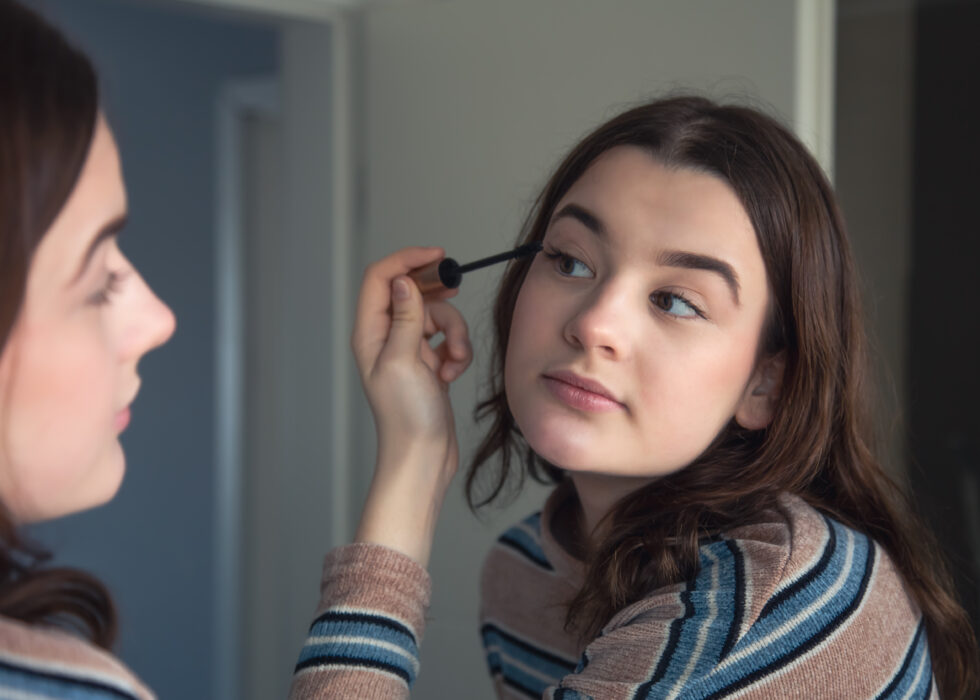
Who Should Consider Semi-Permanent Mascara Instead of Lash Extensions?
Not everyone who wants better-looking lashes wants more lashes.
Sometimes you like the length you already have. You just wish your lashes looked darker without mascara. Maybe extensions feel like too much maintenance, or you’re simply after something subtle enough to wear every day.
That’s where semi-permanent mascara enters the conversation.
When comparing Semi Permanent Mascara vs Lash Extensions, the biggest difference isn’t simply how long they last. It’s what you’re asking the treatment to change.
One enhances your natural lashes. The other adds to them.
Here’s how to figure out which approach sounds more like you.
First, What Is Semi-Permanent Mascara?
Semi-permanent mascara is a professional treatment that coats your natural eyelashes with a longer-lasting formula.
The result is darker, more defined lashes without applying and removing traditional mascara every day.
At O’Some Brows, semi-permanent mascara is applied to the natural lashes and can be used on the upper and lower lash lines. The treatment takes around 30 minutes, with results typically lasting approximately two to three weeks.
It’s particularly suited to someone who looks at their bare lashes and thinks, These are fine. I just wish they showed up more.
How Are Lash Extensions Different?
Lash extensions actually add something that wasn’t there before.
Individual extensions are attached to natural eyelashes to create additional length, volume or both. The final look can range from relatively natural to noticeably dramatic depending on the style chosen.
Because extensions are attached to your natural lashes, they gradually shed along with them. Maintenance appointments are usually needed if you want to keep the set looking consistently full.
So, when comparing the two:
- Semi-permanent mascara enhances your existing lashes.
- Lash extensions add extra length and volume to them.
That difference should guide most of your decision.
1. You Already Like Your Natural Lash Length
Take mascara out of the equation for a moment.
Are you actually unhappy with the length of your lashes?
If the answer is no, extensions may give you more than you’re looking for.
Semi-permanent mascara can make lighter lashes more noticeable from root to tip. Darkening them may be enough to bring out length that wasn’t particularly visible before.
It won’t physically make your lashes longer, but sometimes stronger definition is all that’s missing.
2. You Want a Natural Everyday Look
Not every beauty treatment needs to announce itself.
Some people want to walk into a room with visibly styled lashes. Others simply want to look slightly more awake before they’ve had coffee.
Semi-permanent mascara sits closer to the second category.
Because it works with your natural lashes, the result tends to feel familiar. They’re still your lashes, just darker and more defined.
Extensions offer far more freedom if you want noticeable volume or length.
When deciding between Semi Permanent Mascara vs Lash Extensions, ask yourself whether you want people to notice your lashes or simply notice your eyes a little more.
3. You’re Tired of Applying Mascara Every Morning
Regular mascara isn’t particularly difficult to use.
It’s the repetition that gets annoying.
Apply. Separate the lashes. Clean the mark on your eyelid. Check for smudging later. Remove it before bed.
Then do the whole thing again tomorrow.
O’Some Brows describes its semi-permanent mascara treatment as waterproof and smudge-resistant, making it an option for people who want to reduce that daily routine.
If your main goal is simply to stop reaching for a mascara tube every morning, you don’t necessarily need the added volume of extensions.
4. You Don’t Want Regular Lash Extension Maintenance
Lash extensions aren’t a one-and-done appointment if you want to maintain their appearance.
Natural lashes grow and shed, taking extensions with them. As that happens, gaps gradually appear and refill appointments become part of the routine.
Some people love the results enough that maintenance isn’t an issue.
Others realise they wanted low-maintenance lashes and accidentally signed themselves up for another beauty appointment every few weeks.
Semi-permanent mascara also fades and needs repeating if you want to maintain the effect, but it doesn’t involve maintaining a set of attached extensions.
That may suit someone who wants a simpler commitment.
5. You Exercise or Spend Plenty of Time Outdoors
Sweat and ordinary mascara don’t always have the happiest relationship.
Neither do humidity and eye makeup.
For active clients, the appeal of a longer-lasting lash coating is fairly obvious. You can head to a workout without first wondering whether you’ll leave with mascara under your eyes.
This can be particularly convenient during Atlanta’s warmer, humid months.
Of course, semi-permanent doesn’t mean “ignore all aftercare.” You’ll still need to follow the instructions provided after your appointment to help protect the result.
6. You Want Something for a Vacation
Vacations have a strange ability to turn a five-minute makeup routine into something you suddenly have absolutely no interest in doing.
Beach. Pool. Breakfast. Repeat.
Semi-permanent mascara can be useful when you want your natural lashes to stay defined without packing multiple eye products or applying mascara every morning.
Lash extensions can also be convenient for travel, especially if you want more dramatic lashes in photographs.
Again, it comes down to the look.
- Natural definition? Semi-permanent mascara.
- Extra length and volume? Extensions may be closer to what you have in mind.
What If You Want More Curl Too?
Darkness isn’t the only thing that makes lashes stand out.
Curl can make a significant difference.
O’Some Brows notes that semi-permanent mascara may be combined with services such as a lash lift and tint. A lash lift changes the positioning and curl of your natural lashes, while the mascara coating adds darker definition.
For someone who wants noticeable natural lashes without extensions, that combination may be worth discussing during a consultation.
When Are Lash Extensions the Better Option?
There are situations where semi-permanent mascara simply won’t deliver enough change.
If your natural lashes are very short and your main goal is noticeable length, mascara can only work with what’s already there.
The same applies if you want considerable volume.
Lash extensions provide much greater control over length, fullness and overall style because additional fibers are being attached.
So don’t choose semi-permanent mascara because it sounds easier and then expect extension-level results.
They’re different services for different goals.
Semi-Permanent Mascara in Atlanta
If you’re deciding between Semi Permanent Mascara vs Lash Extensions, start by looking at your natural lashes without makeup.
Do you want to change them, or simply make them easier to see?
O’Some Brows offers semi-permanent mascara alongside other lash services for clients in the Atlanta area, with locations listed in Marietta, Lawrenceville, and Johns Creek Town Center in Suwanee, Georgia.
A consultation can also help you decide whether semi-permanent mascara alone will give you enough definition or whether another lash service better matches the result you have in mind.
It’s Really About How Much Change You Want
Semi-permanent mascara isn’t a lighter version of lash extensions. And extensions aren’t simply mascara that lasts longer.
One works with your natural lashes.
The other adds to them.
If you already like your lashes and mainly want darker definition without a daily mascara routine, semi-permanent mascara makes sense to explore.
If you want noticeably longer, fuller or more dramatic lashes, extensions offer something mascara can’t.
The best treatment isn’t necessarily the one that creates the biggest transformation.
Sometimes it’s the one that solves the exact problem you had in the first place.
Frequently Asked Questions
1. What is the main difference between semi-permanent mascara and lash extensions?
Semi-permanent mascara coats and defines your existing eyelashes. Lash extensions attach additional fibers to natural lashes to create extra length and volume.
2. How long does semi-permanent mascara last?
O’Some Brows states that its semi-permanent mascara treatment typically lasts around two to three weeks, although individual results can vary.
3. Can semi-permanent mascara make short lashes longer?
It can make the full length of your natural lashes more visible, but it doesn’t physically extend them. If additional length is your main goal, lash extensions may be more suitable.
4. Can semi-permanent mascara be combined with a lash lift?
O’Some Brows notes that semi-permanent mascara can be paired with other lash treatments, including a lash lift and tint. Your technician can advise whether combining services is appropriate for your lashes.
5. Is semi-permanent mascara good for vacations?
It can be convenient for travel because the lashes remain darker and defined without daily mascara application. Follow the aftercare instructions provided by your technician to help maintain the treatment.
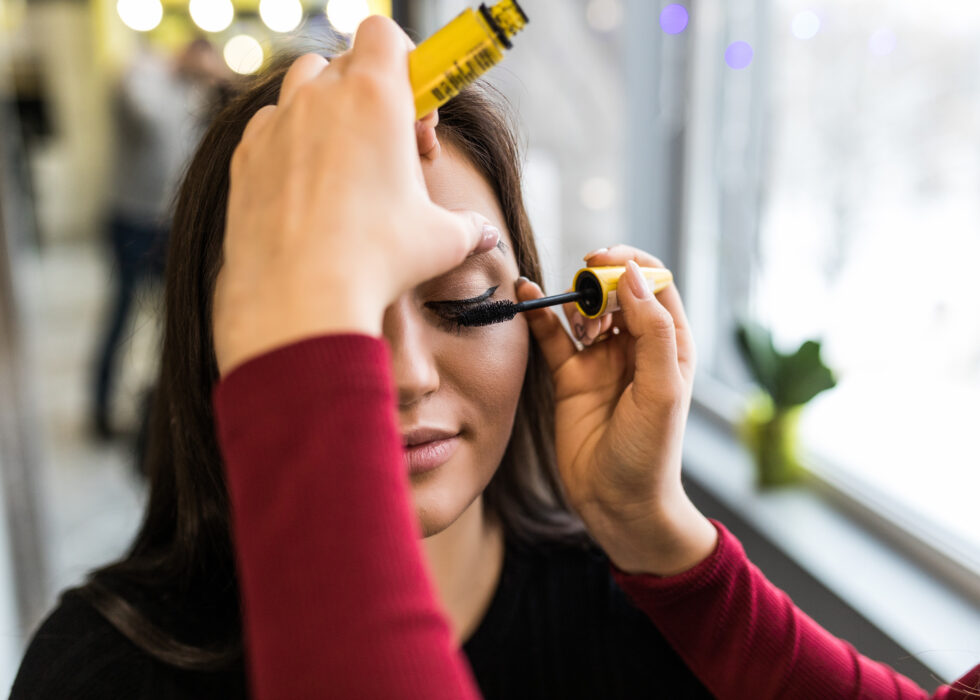
Can Lash Line Enhancement Replace Daily Eyeliner? What to Know Before Booking
For some people, eyeliner takes thirty seconds. For others, it’s a daily negotiation.
One eye looks perfect. The other somehow ends up thicker. You fix that one, and now the first needs fixing too. Five minutes later, you’ve accidentally created a much bolder look than you planned.
Lash line enhancement offers another option. Instead of drawing a visible line above the lashes every morning, pigment is placed along the lash line to create subtle, longer-lasting definition.
But can it actually replace your regular eyeliner?
If you’re considering Lash Line Enhancement Atlanta, the answer depends on what you expect your everyday eyeliner to do.
What Is Lash Line Enhancement?
Lash line enhancement is a form of permanent makeup in which pigment is carefully placed along the natural lash line.
Unlike traditional winged or graphic eyeliner, the goal isn’t necessarily to create an obvious line. The pigment sits close to the lashes, helping the lash base appear darker and more defined.
O’Some Brows describes the treatment as an “invisible eyeliner” effect. You get definition around the eyes without the result necessarily looking like you’ve drawn on eyeliner.
That distinction matters.
If your everyday makeup consists of a thin line simply to make your eyes stand out, lash line enhancement could potentially replace that step.
If you love a thick black wing? Keep your eyeliner pencil nearby.
What Does Lash Line Enhancement Actually Look Like?
Think less “makeup” and more “naturally defined.”
By adding pigment between and around the lash roots, the treatment creates the appearance of a darker lash line. This can also make the lashes themselves look more noticeable.
You’re not adding lashes. You’re not physically making them thicker either.
Instead, you’re reducing the visible skin between the lashes, which can make the entire lash line look denser.
The effect can be especially appealing when you’re wearing little or no makeup.
Your eyes still have some definition, even before mascara enters the picture.
Can It Replace Daily Eyeliner?
For the right person, yes.
But it depends entirely on your usual eyeliner style.
If You Wear Very Thin Eyeliner
Lash line enhancement may significantly reduce or even eliminate your need for daily liner.
The pigment provides consistent definition at the lash roots, so you don’t need to recreate that subtle line every morning.
If You Love Winged Eyeliner
You’ll probably still want regular eyeliner.
Lash line enhancement isn’t designed to give you a dramatic wing that changes with makeup trends or occasions.
You can still apply regular eyeliner over healed permanent makeup whenever you want a stronger look.
If You Rarely Wear Makeup
This is where the treatment can be particularly interesting.
Because the effect is subtle, it can give bare eyes a little more definition without making you look obviously “made up.”
You wake up with it. Go to the gym with it. Head out without makeup and it’s still there.
Lash Line Enhancement vs. Permanent Eyeliner
These terms sometimes get used interchangeably, but the intended look can be different.
Traditional permanent eyeliner may involve a more visible line above the lashes. It can be thicker, stronger and closer to the appearance of conventional eyeliner.
Lash line enhancement is usually much more understated.
Pigment is concentrated around the lash roots rather than being used to create a prominent makeup shape.
If your goal is “I want my eyes to look more defined,” lash line enhancement may be enough.
If your goal is “I want it to look like I’m wearing eyeliner every day,” discuss that clearly during your consultation.
What Happens During the Appointment?
Before the procedure begins, you’ll discuss the look you want with your artist.
This isn’t the moment to simply say, “Whatever you think.”
Explain how you normally wear eyeliner. Bring a photograph if necessary. A barely visible lash enhancement and a noticeable eyeliner effect are two very different outcomes.
The eye area is prepared, and numbing is generally used to make the treatment more comfortable. Pigment is then carefully applied along the lash line.
O’Some Brows notes that lash line enhancement appointments can take approximately one to two hours, including preparation and numbing.
Does Lash Line Enhancement Hurt?
The idea of anything being done near the eyes can make people nervous.
Numbing is used to help minimise discomfort, but individual sensitivity varies. You may feel pressure, vibration or some discomfort during the procedure.
The eyes can also appear slightly swollen or red immediately afterward.
If you’re particularly sensitive around your eyes, mention it during the consultation rather than waiting until the procedure has started.
What Is the Healing Process Like?
Fresh lash line enhancement can initially look darker or stronger than the healed result.
Some mild swelling or tenderness may occur after the appointment. As the area heals, the pigment softens and settles.
Avoid judging the final result after two days.
Permanent makeup takes time to heal, and the finished appearance may not become clear for several weeks.
Your artist will provide specific aftercare instructions. Follow them carefully.
That may mean temporarily avoiding eye makeup, excessive moisture, swimming, saunas, steam and certain eye-area treatments while healing.
And yes, even if you’re tempted to “fix” a tiny flaky area, leave it alone.
What About Contact Lenses?
If you wear contact lenses, let your artist know before your appointment.
You may be asked to remove them for the procedure and avoid wearing them for a period afterward while the eye area settles.
It can be useful to bring your glasses with you so you’re not trying to navigate the trip home half-blind.
How Long Does Lash Line Enhancement Last?
Lash line enhancement is considered a form of permanent makeup, but that doesn’t mean the pigment remains identical forever.
It gradually fades over time.
Skin characteristics, sun exposure, skincare products, lifestyle and pigment retention can all influence how the treatment ages. Refresh appointments may eventually be recommended if you want to maintain stronger definition.
The advantage is obvious: you’re thinking in terms of months or years rather than reapplying a line every morning.
Who Might Like Lash Line Enhancement?
The treatment may be worth considering if you:
- Wear subtle eyeliner almost every day
- Want your lash line to appear darker
- Prefer minimal makeup
- Struggle to apply eyeliner evenly
- Want definition that doesn’t smudge during the day
- Have an active lifestyle
- Want to shorten your morning routine
It can also be useful for someone who likes the appearance of eyeliner but doesn’t necessarily enjoy the process of applying it.
When Might Regular Eyeliner Be Better?
Regular eyeliner still wins on flexibility.
Black today. Brown tomorrow. Tiny wing for work. Dramatic cat eye on Saturday.
Permanent makeup can’t give you that level of daily experimentation.
If eyeliner is one of the parts of makeup you genuinely enjoy changing, lash line enhancement should be viewed as a base layer of definition, not necessarily a replacement.
You can always add conventional eyeliner once the area has completely healed.
Lash Line Enhancement in Atlanta
When researching Lash Line Enhancement Atlanta, look carefully at healed results rather than only freshly completed treatments.
Fresh pigment naturally appears stronger. Healed photographs give you a better idea of an artist’s actual style and how subtle the finished work can become.
O’Some Brows offers lash line enhancement among its permanent makeup services for Atlanta-area clients, with locations in Marietta, Lawrenceville, and Johns Creek Town Center in Suwanee, Georgia.
So, Can You Throw Away Your Eyeliner?
Maybe don’t throw it away just yet.
If your everyday eyeliner is simply a thin line used to make your lashes and eyes look more defined, lash line enhancement could remove that step from most mornings.
If you love changing your eyeliner or regularly wear dramatic wings, you’ll probably still use conventional makeup.
That’s what makes lash line enhancement useful. It doesn’t have to replace every eyeliner look you’ve ever worn.
It can simply give you a head start.
For anyone considering Lash Line Enhancement Atlanta, the best question to ask during your consultation is simple: Can this treatment recreate the amount of definition I normally wear every day?
Once you know that, deciding becomes much easier.
Frequently Asked Questions
1. Is lash line enhancement the same as eyeliner tattooing?
Both involve cosmetic pigment around the eyes, but lash line enhancement is generally designed to be subtler. Pigment is concentrated along the lash roots to create definition rather than an obvious eyeliner shape.
2. Can I still wear regular eyeliner after lash line enhancement?
Yes, once the area has fully healed. You can add conventional eyeliner whenever you want a thicker line, wing or more dramatic makeup look.
3. How long does a lash line enhancement appointment take?
O’Some Brows indicates that the treatment generally takes around one to two hours, including consultation, preparation and numbing.
4. Will lash line enhancement make my eyelashes thicker?
It doesn’t physically thicken or add eyelashes. Darkening the area around the lash roots can, however, make the lash line appear fuller and more defined.
5. Where can I get lash line enhancement near Atlanta?
O’Some Brows offers lash line enhancement for Atlanta-area clients and currently lists locations in Marietta, Lawrenceville, and Johns Creek Town Center in Suwanee, Georgia.
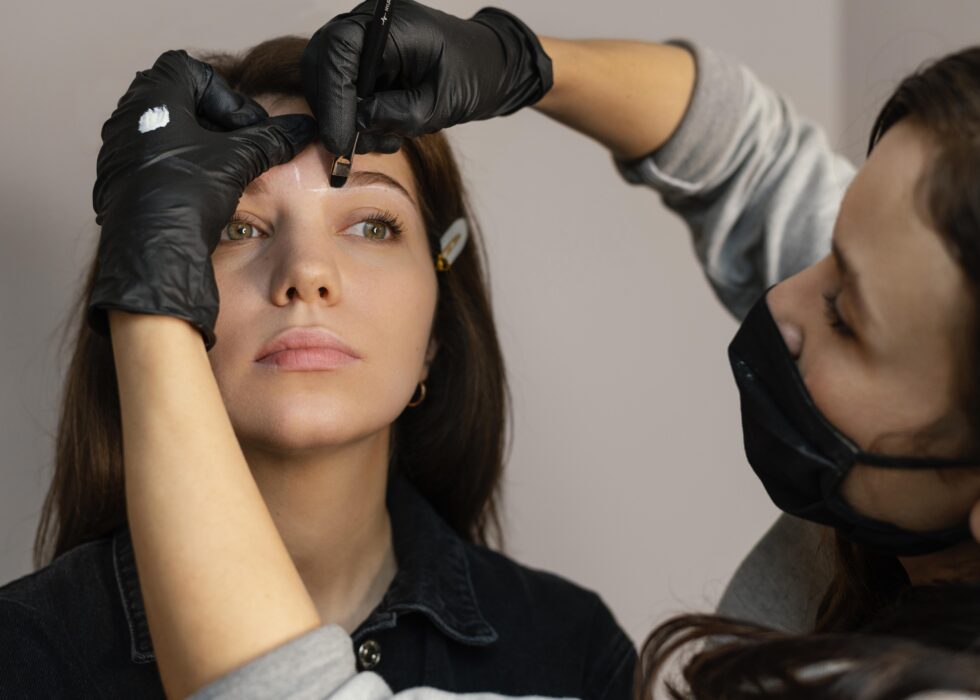
5 Signs Your Brows May Benefit From Brow Lamination Instead of Cosmetic Tattooing
Sometimes your brows don’t need more hair. They don’t even need the appearance of more hair.
They just need the hairs already there to cooperate.
That’s an important distinction when choosing between brow lamination and cosmetic tattooing. Cosmetic tattooing can create longer-lasting definition and help visually fill sparse areas. Brow lamination works with your natural hairs, repositioning them to create a neater, fuller-looking shape.
So before assuming permanent makeup is your next step, take another look at your natural brows.
If you’re researching Brow Lamination Atlanta, these five signs may suggest lamination is worth considering first.
1. You Have Plenty of Brow Hair, But It Grows in Every Direction
One section points upward. Another grows sideways. The tail seems determined to head downward no matter how much brow gel you use.
Sound familiar?
This is exactly the kind of problem that adding pigment won’t necessarily solve.
Brow lamination is designed to reposition natural brow hairs so they sit in a more consistent direction. Once the hairs are lifted and arranged, the entire brow can look cleaner and more structured.
Cosmetic tattooing serves a different purpose. Techniques such as Nano Brows use pigment to imitate fine hairs, which can be helpful when natural brow density is limited.
But if you already have plenty of hair, adding the appearance of more may not address the actual issue.
Sometimes the problem isn’t density. It’s direction.
2. Your Brows Look Fuller When You Brush Them Up
Try a quick experiment.
Take a clean spoolie and gently brush your brow hairs upward and slightly outward.
Does the shape suddenly look fuller?
Do small gaps become less obvious?
Can you see an arch you didn’t really notice before?
If so, your brows may already contain enough hair to create the look you want. The hairs simply aren’t sitting in the most flattering position.
Brow lamination can help maintain that lifted, groomed effect for longer than everyday brow gel.
This is one reason Brow Lamination Atlanta may appeal to people who love the fluffy, brushed-up brow look but don’t want to recreate it from scratch every morning.
3. Your Main Complaint Is Shape, Not Sparse Areas
There’s a useful question to ask yourself before choosing any brow treatment:
What am I actually trying to fix?
If the answer is missing sections, significant gaps or very sparse brows, cosmetic tattooing may be worth discussing with a permanent makeup artist.
But perhaps your brows already have enough hair. You simply don’t like how they sit.
Maybe the arch looks messy because several hairs point downward. Perhaps one brow appears slightly different because its hairs grow in another direction.
Those are styling concerns.
Brow lamination focuses on reshaping how your existing hairs are positioned. Cosmetic tattooing, by comparison, uses pigment in the skin to create longer-lasting visual definition.
Choosing between them becomes easier once you separate a hair-positioning problem from a lack-of-hair problem.
4. You’re Not Ready for a Longer-Lasting Brow Change
Permanent makeup is designed to last.
That’s one of its advantages, but it also means you should be comfortable with a longer-term change before going ahead.
Maybe you’re still figuring out whether you prefer thin brows, fluffy brows, defined arches or something softer. Trends change too. The brows you saved on Instagram two years ago may not be the brows you’re saving today.
Lamination gives you more room to experiment.
The treatment isn’t permanent. As the effect gradually wears off and your brow hairs go through their natural growth cycle, they return to their usual behavior.
That can make lamination an appealing option for someone who wants a noticeable brow refresh without immediately committing to cosmetic tattooing.
It can also help you learn what you actually like.
Perhaps seeing your brows lifted makes you realize that your natural density was never the issue in the first place.
5. Brow Gel Works for You—It Just Doesn’t Work for Long Enough
This might be the clearest sign of all.
You brush your brows into place. Add gel. Look in the mirror and think, Yes, that’s exactly how I want them.
Then a few hours pass.
The hairs drop. The tail moves. That carefully created fluffy effect quietly disappears.
If brow gel already gives you the shape you like, lamination may offer a longer-lasting version of a similar styling idea.
The treatment helps make the hairs more manageable so they can be brushed and positioned into the desired shape.
That doesn’t mean you’ll never touch your brows again. Lamination is better thought of as making your natural hairs easier to work with rather than permanently freezing them into one position.
Still, if your daily struggle is keeping hairs where you put them, that’s very different from needing cosmetic pigment.
When Cosmetic Tattooing May Make More Sense
Lamination isn’t a replacement for every brow treatment.
If you have genuinely sparse areas, missing sections or very little natural brow hair, repositioning existing hairs can only accomplish so much.
That’s where permanent makeup techniques may be useful.
O’Some Brows offers options such as Nano Brows, which use fine pigment strokes designed to resemble natural brow hairs. Rather than controlling existing hair, the technique can create the visual impression of hair in areas where greater definition is needed.
Think about the difference this way:
Lamination rearranges what you have. Cosmetic tattooing can visually add what appears to be missing.
Neither is automatically the better treatment.
They’re solving different problems.
Can You Combine Brow Treatments?
Your brows don’t always fit neatly into one category.
You might have plenty of hair through the front but lighter or thinner sections toward the tail. You may want your hairs repositioned while also needing more color.
That’s why a professional consultation can be more useful than choosing a treatment solely because you liked someone’s before-and-after photo.
Depending on your brows, tinting, shaping, lamination or permanent makeup may be discussed individually or as part of a broader brow plan.
Finding Brow Lamination in Atlanta
When searching for Brow Lamination Atlanta, look beyond dramatic before-and-after photographs.
Pay attention to whether the finished brows suit the client’s face and natural hair pattern. Lamination doesn’t have to mean extremely vertical, heavily brushed-up eyebrows. The hairs can be positioned to create a softer and more controlled result too.
O’Some Brows provides brow and permanent makeup services for clients across the Atlanta area, with locations listed in Marietta, Lawrenceville, and Johns Creek Town Center in Suwanee, Georgia.
A consultation can help determine whether your brows actually need added pigment—or whether the natural hairs simply need a better sense of direction.
Don’t Add More Before Looking at What You Already Have
It’s tempting to see a sparse-looking section and immediately think you need more brow.
But brush the hairs differently first.
Look at how much natural density you actually have. Notice whether the problem disappears when the hairs are lifted and arranged.
If it does, cosmetic tattooing may be more than you currently need.
For someone considering Brow Lamination Atlanta, that is the biggest reason to explore lamination: sometimes the fuller, cleaner brow you’re trying to create is already there.
It just needs a little rearranging.
Frequently Asked Questions
1. What is the difference between brow lamination and cosmetic tattooing?
Brow lamination changes the direction and positioning of your natural brow hairs. Cosmetic tattooing places pigment into the skin to create longer-lasting definition or imitate the appearance of additional brow hairs.
2. Can brow lamination make sparse eyebrows look fuller?
It can make brows appear fuller by lifting and repositioning existing hairs. However, it cannot create hair in completely bare areas.
3. Is brow lamination permanent?
No. Brow lamination is temporary, and the effect gradually wears off as your natural brow hairs grow and return to their usual pattern.
4. Should I choose lamination if I have gaps in my eyebrows?
It depends on how significant the gaps are and how much natural hair surrounds them. Repositioning hairs may disguise minor sparse areas, while more noticeable gaps may require a different treatment.
5. Where can I get brow lamination near Atlanta?
O’Some Brows offers brow services for Atlanta-area clients and currently lists locations in Marietta, Lawrenceville, and Johns Creek Town Center in Suwanee, Georgia. A consultation can help determine whether lamination or another brow service better suits your natural brows.
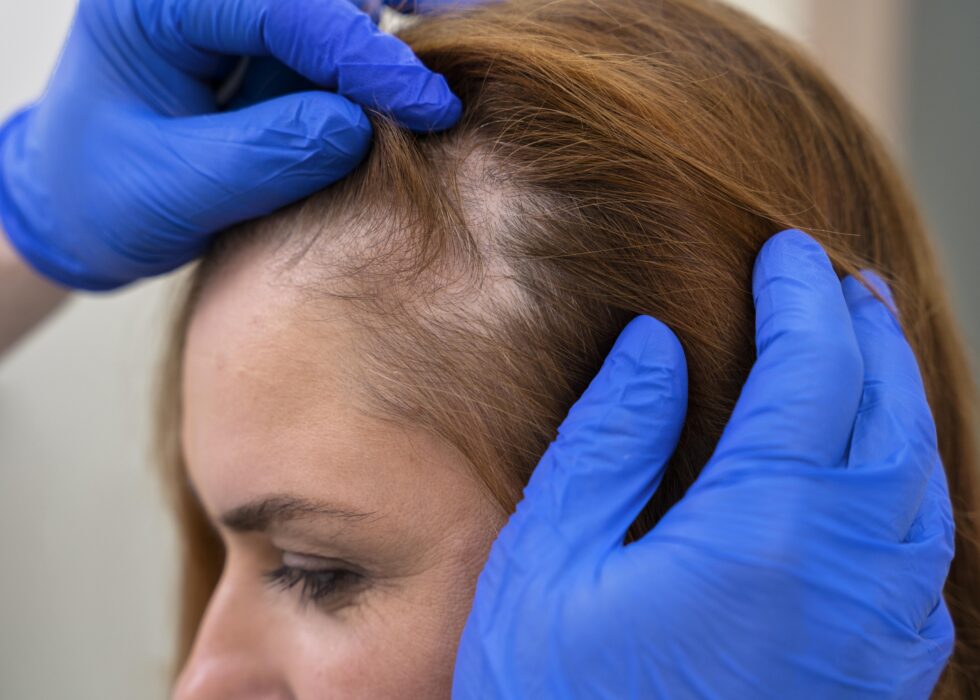
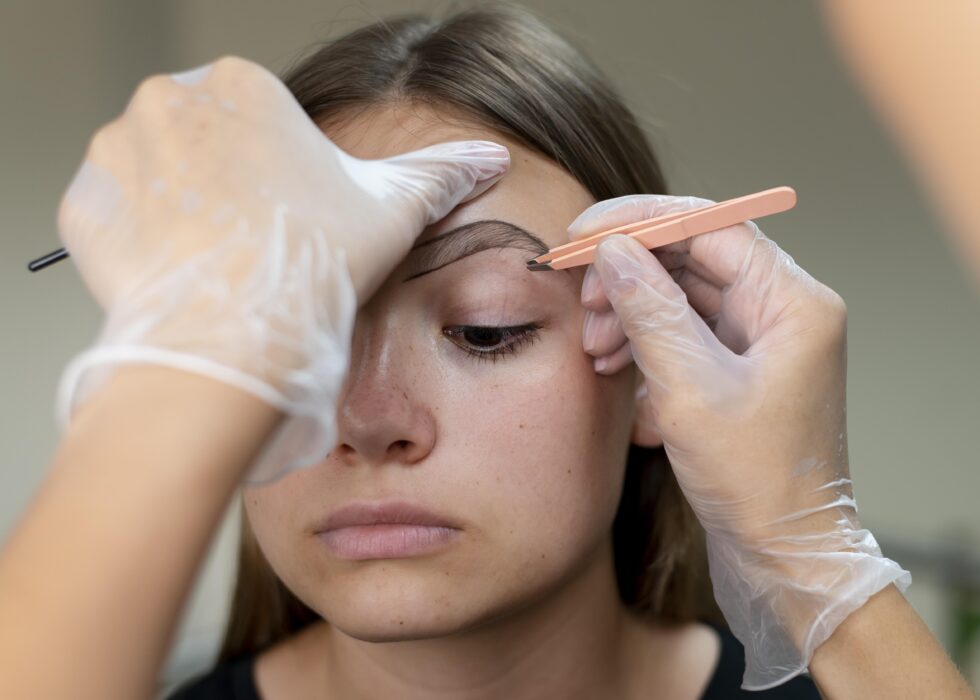
Eyebrow Tinting vs Eyebrow Tattooing: Which Gives You the Look You Want?
Two people can say, “I want fuller brows,” and mean completely different things.
One may already have plenty of brow hair, except half of it is so light that it barely shows. The other may have visible gaps where there simply isn’t enough hair to create the shape they want.
The first person might benefit from tinting. The second may be looking at eyebrow tattooing.
If you’re searching for Eyebrow Tinting Atlanta and wondering whether tinting or a longer-lasting brow treatment makes more sense, start with what each service actually changes.
What Does Eyebrow Tinting Do?
Eyebrow tinting darkens your existing brow hairs using semi-permanent color.
That’s the important part: existing hair.
Fine or light-colored hairs can practically disappear against the skin, making the brows look thinner than they really are. Once those hairs are tinted, the natural brow shape often becomes much easier to see.
Tinting can help create:
- More visible brow hairs
- A stronger-looking natural shape
- More even-looking color
- A fuller appearance
- Less reliance on brow pencils and gels
O’Some Brows offers eyebrow tinting as part of its brow and lash services.
What Is Eyebrow Tattooing?
Eyebrow tattooing works differently because pigment is placed into the skin rather than simply coloring the hairs.
Modern permanent makeup includes several techniques designed to create or enhance the appearance of eyebrows. At O’Some Brows, one of these options is Nano Brows, which uses fine, hair-like pigment strokes to imitate natural brow hairs.
This can be useful when the issue isn’t light hair but missing hair.
If you have gaps, sparse sections or areas where the natural brow doesn’t extend as far as you’d like, tattooing can create definition in places where tinting has nothing to color.
The Simplest Way to Understand the Difference
Imagine removing all makeup and looking closely at your brows.
Can you see plenty of fine hairs, but they’re much lighter than you’d like?
Tinting could be enough.
Can you see skin where you’d ideally like brow hairs to appear?
That’s where cosmetic tattooing becomes more relevant.
Tinting enhances what’s there.
Tattooing can create the appearance of hair or definition where natural brow density is limited.
Which Looks More Natural?
Either can look natural when the treatment suits the person.
Tinting tends to be subtle because you’re still looking at your own brow hairs. The biggest change is their visibility.
With eyebrow tattooing, natural-looking results depend heavily on technique, pigment selection and design. Nano Brow techniques, for example, are intended to imitate individual strands rather than simply create a solid block of color.
The goal shouldn’t be to make every client’s eyebrows identical.
Your facial structure, natural growth pattern and existing brow shape should influence the design.
How Long Does Eyebrow Tinting Last?
Tinting is the shorter-term option.
O’Some Brows’ information indicates that eyebrow and eyelash tinting can generally last around four to six weeks, although results vary.
Cleansing habits, skincare products, sun exposure and your natural hair growth cycle can influence how quickly the color fades.
That shorter lifespan has an advantage: commitment is low.
If you’re experimenting with darker brows for the first time, tinting gives you a chance to see how you feel about greater definition without making a long-term change.
How Long Does Eyebrow Tattooing Last?
Cosmetic eyebrow tattooing is considerably longer-lasting, but it isn’t necessarily “forever.”
Permanent makeup pigment gradually fades and changes over time. How long your results remain visible can depend on the technique used, skin characteristics, lifestyle, sun exposure and aftercare.
Touch-ups or color refresh appointments may eventually be recommended.
This longer commitment is why your consultation matters. Shape and color decisions deserve more thought when pigment is being placed into the skin rather than temporarily added to brow hairs.
What About the Appointment?
Eyebrow tinting is relatively straightforward. A suitable shade is selected and applied to the natural brow hairs before being removed after processing.
Eyebrow tattooing is more involved.
The artist needs to assess your existing brows, discuss the desired shape, choose an appropriate pigment and map the brow before beginning the pigment application.
There is also a healing period afterward.
Fresh permanent makeup may initially appear stronger than the final healed result. The pigment softens as the skin heals, so judging your brows immediately after treatment doesn’t tell you exactly how they’ll ultimately look.
Which Requires More Aftercare?
Eyebrow tattooing.
Tinting doesn’t involve placing pigment into the skin, so the process and recovery are simpler.
Permanent makeup requires proper healing and more specific aftercare. You’ll need to follow your artist’s instructions regarding moisture, skincare products, sun exposure, makeup and touching the treated area.
Picking at flaking or healing skin is a particularly bad idea. It can interfere with pigment retention and the final result.
Can Tinting Cover Brow Gaps?
Only when hair exists within those gaps.
This is probably the biggest misunderstanding surrounding eyebrow tinting.
Tint can make tiny, almost invisible hairs show up. Sometimes that alone makes a sparse-looking area appear surprisingly full.
But if there’s no hair there, tinting can’t create one.
That’s when a technique such as Nano Brows may offer something tinting can’t: pigment strokes designed to visually resemble brow hairs.
What If You’re Not Ready for Tattooing?
Start smaller.
If you have enough natural brow hair, trying Eyebrow Tinting Atlanta first can help you understand how you look with stronger, darker brows.
You may discover that tinting gives you all the definition you wanted.
Or you may realize that color isn’t actually the issue. You want additional shape, a longer tail or coverage through genuinely sparse areas.
Either outcome gives you useful information before considering a longer-lasting treatment.
Eyebrow Tinting vs Tattooing: Which Should You Choose?
Don’t choose based on which treatment sounds more advanced. Choose according to the problem you’re trying to solve.
Tinting may make more sense when: you already have natural brow hairs but want them darker and more visible.
Eyebrow tattooing may make more sense when: you have sparse areas, gaps or want longer-lasting definition beyond what your existing hairs can provide.
O’Some Brows provides both brow tinting and permanent makeup options and currently lists Atlanta-area locations in Marietta, Lawrenceville, and Johns Creek Town Center in Suwanee, Georgia.
A consultation can help determine whether your brows need more color, more visual density—or simply a little professional shaping.
Frequently Asked Questions
1. Is eyebrow tinting the same as eyebrow tattooing?
No. Tinting temporarily colors existing brow hairs. Eyebrow tattooing places cosmetic pigment into the skin to create longer-lasting definition or the appearance of additional brow hairs.
2. Can eyebrow tinting make sparse eyebrows look fuller?
Yes, if fine or light hairs already exist in the sparse-looking areas. Tinting makes those hairs more visible. It cannot create hair where none exists.
3. How long does eyebrow tinting last?
Eyebrow tinting generally lasts around four to six weeks, although your hair growth cycle, skincare routine and lifestyle can affect how quickly it fades.
4. Is Nano Brows a type of eyebrow tattooing?
Nano Brows is a permanent makeup technique that uses fine pigment strokes designed to resemble natural brow hairs. O’Some Brows offers Nano Brows among its permanent makeup services.
5. Where can I get eyebrow tinting in Atlanta?
O’Some Brows offers eyebrow tinting and currently lists Atlanta-area locations in Marietta, Lawrenceville, and Johns Creek Town Center in Suwanee, Georgia.