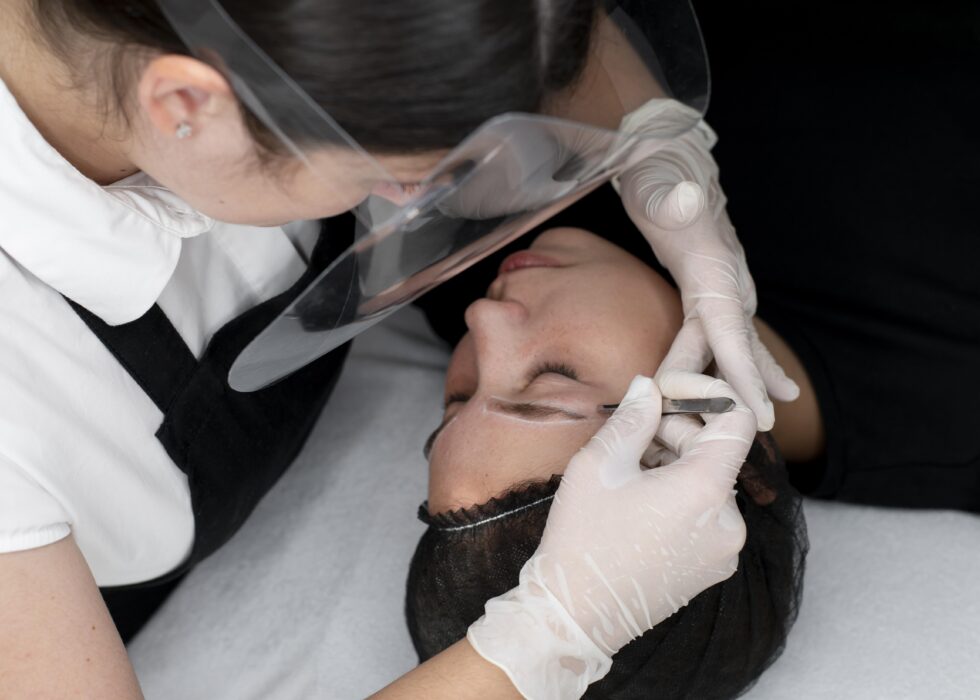

Eyebrow Tattoo Removal: Options, Process & What to Expect
Remember when you thought those brows were going to be your forever look?
Whatever your reason may be, removal is absolutely possible.
Eyebrow tattoo removal has come a long way. Whether you want to lighten, fade, or completely remove old permanent makeup, there are two solid options: saline removal for brows and laser brow tattoo removal. Both work. But both have their pros and cons.
In this blog, we will talk about the step-by-step process and method that might be right for you.
Let’s get the brows back to their natural shape and color.
Why People Remove Eyebrow Tattoos
People can get this urge to remove a brow tattoo following these common reasons:
Color Changes Over Time
First, the color changes over time. The brows you got five years ago might not look the same today. Pigments fade. Color turns blue, grey, or even orange.
The Shape Spreads
Second, the shape spreads. As skin ages and loses collagen, tattoo pigments can blur or expand beyond the original lines.
Trends and Preferences Change
Third, trends and preferences change over time. Remember the super thin brows of the 90s? Those thick Sharpie-style blocks from a few years ago? Your face shape and personal style evolve.
Whatever the reason is, you can get them removed or enhanced.
Option 1: Saline Removal for Brows
What Is It?
Saline removal for brows is a non-laser technique that uses a simple salt-based solution. Your artist applies it manually with a fine needle or a small pen-like tool similar to how the original tattoo was done, but in a reverse manner.
How Does It Work?
The saline solution is placed in the same skin layer as the pigment. Once it is inside the skin, it draws the old tattoo pigment upward to the surface of your skin. Over a few days, tiny scabs form, fall off naturally, and carry the unwanted pigment away with them.
It’s like a magnet pulling the color out, layer by layer.
Who Is It Best For?
- People with lighter tattoos that just need fading, not full removal
- Those with darker skin tones (laser can sometimes cause light spots or hypo-pigmentation)
- Anyone who wants gradual, controlled fading rather than a quick zap
What Are the Downsides?
- It takes multiple sessions – usually 3 to 6, sometimes more
- Healing takes longer because scabbing is part of the process
- You will need to wait 6 to 8 weeks between sessions
The Good News
It rarely causes scarring when done correctly. And because it is manual, the artist has complete control over which areas to target.
Option 2: Laser Brow Tattoo Removal
Want a faster and more high-tech option? Try laser brow tattoo removal.
What Is It?
A laser brow tattoo removal technique that uses targeted beams of light energy to break down old pigment hiding under your skin. It doesn’t involve any needle work or manual scraping. Just quick pulses of light.
How Does It Work?
The laser energy is flashed onto your skin, which shatters the tattoo pigment into tiny fragments.
It sounds fancy, but behind it, science is solid.
Who Is It Best For?
- People with dark, dense, or old pigmented brows that need fading
- People who want faster results
- Those with lighter skin tones for contrast between skin and pigment
What Are the Downsides?
- Some pigments turn darker before they fade. This is called oxidation, although it can be resolved
- Redness and swelling are common for a few days
- Not ideal for very light colored pigments
- More expensive per session than saline
The Good News
It works fast. Significant change is seen just after one or two sessions.
The Removal Process
Whether you choose saline or laser, the steps are similar.
Step 1: Consultation
First, a consultation where the artist assesses your pigment.
Step 2: Numbing
Then numbing cream is applied.
Step 3: Treatment
The procedure itself takes 10 to 45 minutes depending on the method.
Step 4: Aftercare
Aftercare is simple:
- Keep the area clean
- No makeup for a week
- Never pick at scabs
Sessions are spaced 6 to 8 weeks apart.
What to Expect After Removal
Right after eyebrow tattoo removal, expect redness or mild swelling.
After Saline Removal
With saline, tiny scabs form and fall off within 1 to 2 weeks.
After Laser Removal
With laser, redness fades in 2 to 5 days.
Final Results
Complete results take 3 to 6 months.
Be patient; removal is a journey.
FAQ (Quick Answers)
Q: Does It Hurt?
A: Mild discomfort. Numbing cream helps a lot.
Q: How Many Sessions?
A: Saline removal for brows: 3–6 sessions. Laser brow tattoo removal: 1–3 sessions.
Q: Can All Tattoos Be Fully Removed?
A: Not always. Sometimes a light shadow remains.
Q: Which Is Cheaper?
A: Saline per session is usually less expensive, but laser may need fewer sessions.
Conclusion
Eyebrow tattoo removal is absolutely possible. Saline removal for brows works well for gentle, controlled fading. Laser is faster but not for everyone.
Both require multiple sessions and proper aftercare. Always choose a licensed professional.
And remember, faded brows are better than brows you hate.