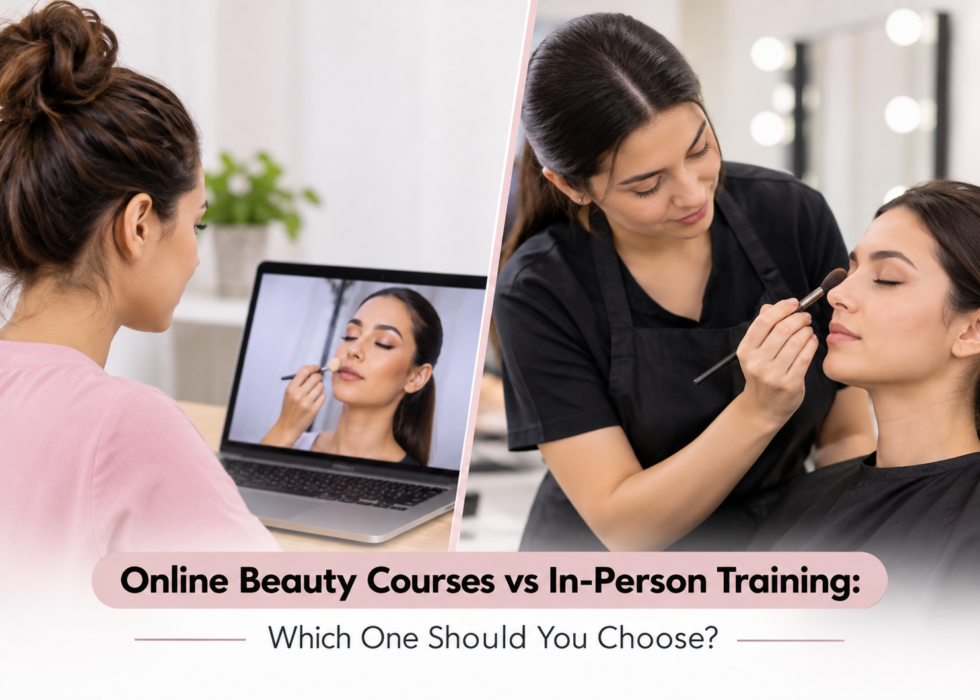

Online Beauty Courses vs In-Person Training: Which One Should You Choose?
A video can show you exactly how a lash fan is picked up, how a brow is mapped or how a cosmetic tattoo machine is held. You can pause it, replay it and watch the demonstration as many times as you need.
But there’s one thing a video cannot do: notice that your hand is slightly tilted, that you’re applying too much pressure or that your technique needs correcting.
That’s where the difference between online and in-person beauty training becomes more apparent.
Online Beauty Training Courses have made it easier to explore new skills without travelling to an academy or working around a fixed classroom schedule. For someone considering a career in the beauty industry, that flexibility can be appealing. The real question, though, is what you expect to learn and whether the format can help you develop the skills needed to perform the treatment.
Watching a technique is only the beginning
A good demonstration can teach you a surprising amount. You can watch how an artist prepares their workstation, studies a client’s features, selects products and approaches a particular treatment. You can also spend time learning the theory behind the work.
For instance, someone interested in cosmetic tattooing can begin by understanding skin anatomy, pigment selection, colour theory and brow design. Similarly, a person exploring lash extensions can learn about different lash styles, eye shapes, mapping and natural lash health.
These subjects give you a foundation. They help you understand why an artist makes certain decisions instead of simply copying their movements.
However, the moment you pick up the tools yourself, things become less predictable.
When practising microblading, the pressure and movement of your hand affect the strokes you create. With lash extensions, even a small mistake in isolation or adhesive placement can change the result. These are not details you can fully understand by watching someone else work.
You have to try, make adjustments and practise until the movements become more controlled.
The part of training that is difficult to replicate on a screen
Consider a beginner learning lash extensions. They may understand the difference between classic and volume lashes, recognise the tools and know how lash mapping works. Yet, during their first attempt, they might struggle to isolate individual natural lashes or maintain consistent placement.
An experienced trainer can spot these problems while the student is working. A small correction at the right moment can make a noticeable difference to how the technique develops.
Cosmetic tattooing presents a similar learning curve. Brow mapping might look straightforward in a demonstration, but creating a shape that suits an individual face takes observation and judgement. Pigment selection, skin response and hand control also need more than theoretical understanding.
This is why practical sessions matter. They give students the opportunity to work with the tools, develop control and receive feedback while learning.
At an academy, you also get to observe how an experienced artist approaches situations that don’t always appear in a perfectly edited tutorial. Real clients have different features, preferences and skin conditions. Learning to account for those differences is part of becoming a capable beauty professional.
Does that mean online learning isn’t worth it?
Not at all. It simply has a different role.
Online learning can be particularly useful when you want to explore a subject before investing in professional training. It can also help existing beauty professionals refresh their knowledge, study new concepts or revisit areas they find challenging.
The important thing is to look beyond the course title.
An online programme might teach the theory of a treatment, demonstrate its application or help you understand the products and equipment involved. That does not necessarily mean it offers supervised practical experience or prepares you to work independently with clients.
Before enrolling, find out exactly what the course covers. Ask whether you will be expected to practise on your own, whether practical assessment is included and how you can get feedback on your work.
A certificate is worth understanding too. Check what it represents, what skills have been assessed and whether additional training or local licensing requirements apply before you offer the treatment professionally.
Choosing a course should start with the skill you want to develop
Someone learning general beauty theory may be perfectly comfortable studying online. Someone preparing to work with a client’s skin or eyes needs to think more carefully about practical instruction.
For technical treatments such as microblading, nano brows and lash extensions, look for training that gives you time to practise rather than relying entirely on demonstrations. Ask about the trainer’s industry experience, the practical component, the class size and the kind of feedback students receive.
At O’some Brows Academy, in-person training is available for people interested in cosmetic tattooing and lash techniques. The academy’s courses cover areas such as microblading, cosmetic tattooing and lash extensions, with practical learning as part of the training experience.
You can explore the available cosmetic tattooing training courses and lash training courses to understand which programme aligns with your interests.
There is nothing wrong with choosing the most convenient way to learn. Just make sure convenience isn’t the only thing influencing your decision. The training format should match the kind of professional skill you want to develop.
Frequently Asked Questions
- Are online beauty training courses suitable for complete beginners?
They can be a useful starting point. Beginners can use online lessons to understand beauty concepts, tools, techniques and hygiene practices. However, practical treatments require hands-on experience before a student can confidently work with clients.
- Can I learn lash extensions through an online course?
You can learn the theory behind lash extensions, including lash types, mapping, eye anatomy and application methods. Developing isolation, placement and adhesive control requires regular practice and, ideally, guidance from an experienced trainer.
- Is in-person training necessary for cosmetic tattooing?
Practical training is particularly important in cosmetic tattooing because the work involves applying pigment to the skin. Students need to develop hand control, understand skin response and learn safe working practices through supervised practice.
- What should I check before paying for an online beauty course?
Read the syllabus carefully. Check whether it covers theory only or includes practical assignments, assessments and instructor feedback. Also clarify what the certificate means and whether the training meets the requirements relevant to the treatments you intend to offer.
- Can I take online lessons before joining an in-person beauty course?
Yes. Studying the fundamentals beforehand can help you become familiar with the terminology, tools and techniques. It can also make practical sessions easier to follow, as you’ll already have some understanding of the subject.